Whether you’re a new parent navigating the grocery aisles or a family trying to stretch your monthly budget, food assistance programs can be a total lifesaver. But with all the acronyms out there, it’s easy to get confused.
Two of the most common programs are SNAP and WIC. While they both help you put food on the table, they work very differently. Here is everything you need to know about the differences, benefits, and eligibility for both, including a detailed look at SNAP vs WIC.
Table of Contents
What is SNAP?
SNAP stands for the Supplemental Nutrition Assistance Program (formerly known as food stamps).
It is a broad program designed to help low-income individuals and families buy the food they need for good health. Think of it as a general supplement to your grocery budget.
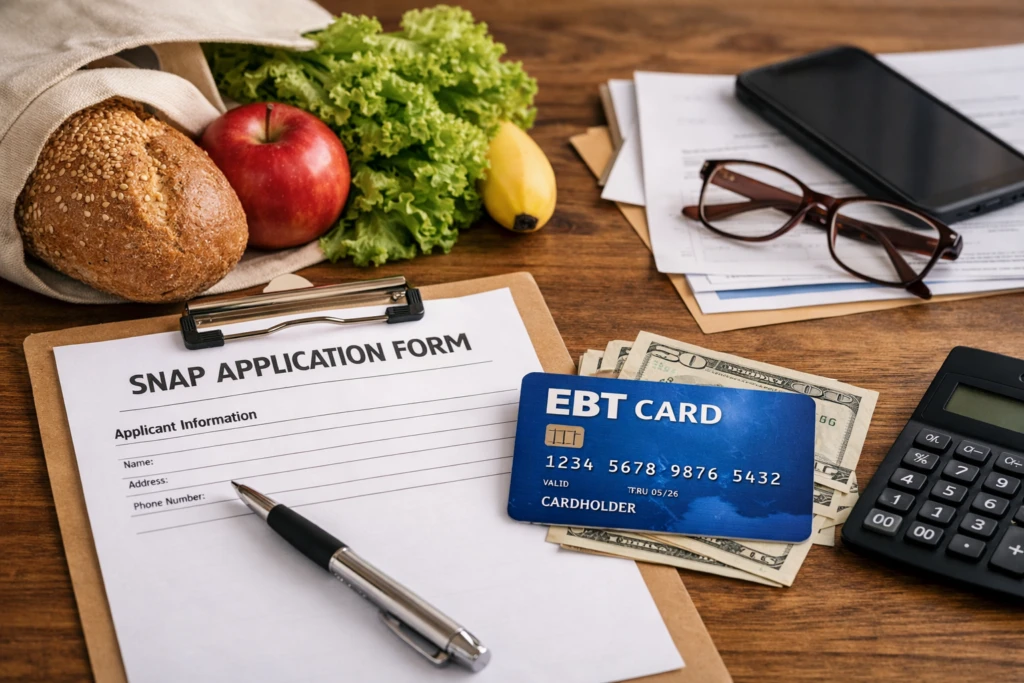
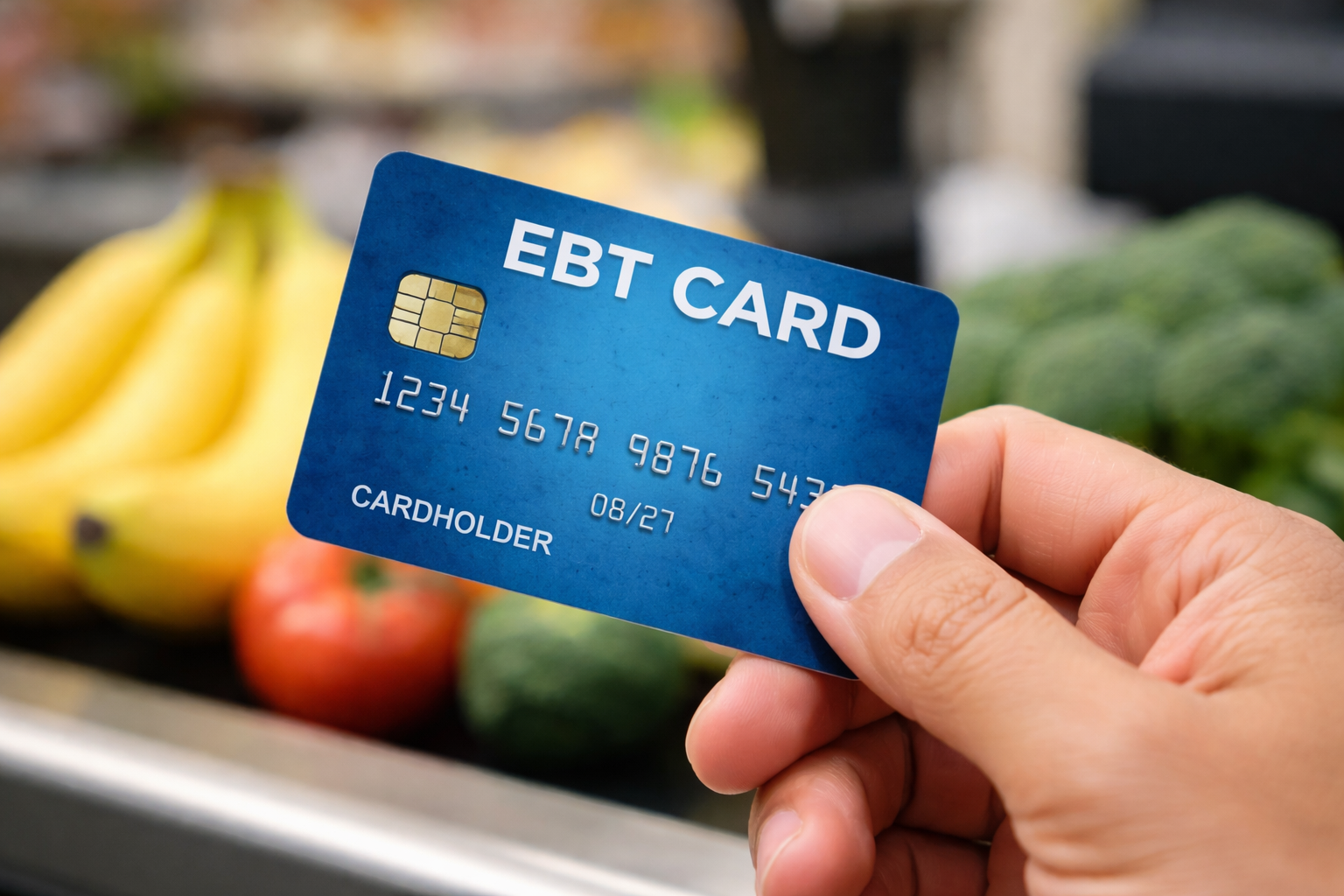
- How it works: Benefits are loaded onto an Electronic Benefits Transfer (EBT) card, which works just like a debit card at most grocery stores and even some farmers’ markets.
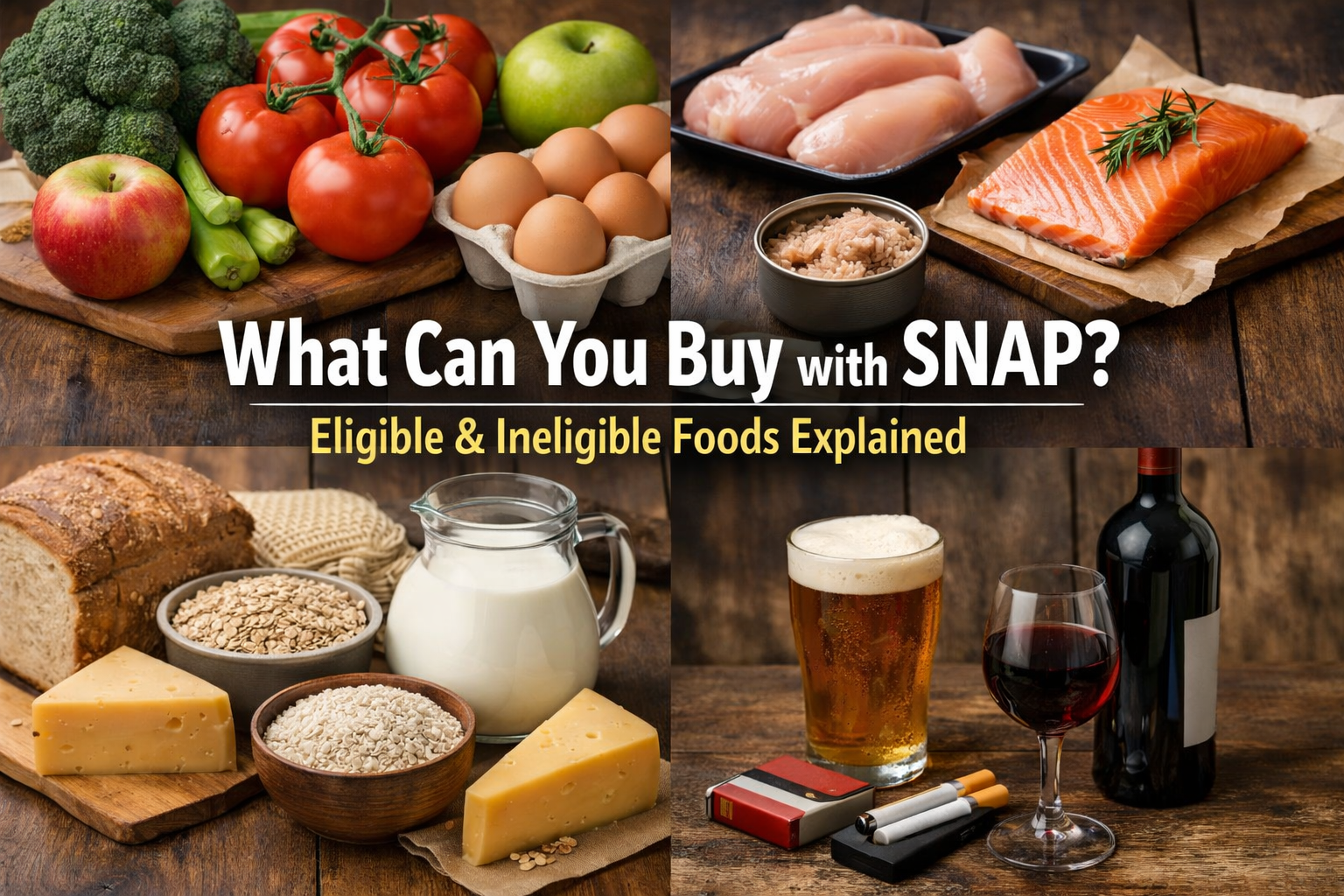
- What you can buy: Almost any food item for the household, including breads, cereals, fruits, vegetables, meats, and dairy. Learn more
What is WIC?
WIC stands for Women, Infants, and Children.
It is a specialized nutrition program specifically for pregnant individuals, new mothers, and children under the age of five. Unlike SNAP, WIC is not just about the money; it’s about ensuring specific nutritional needs are met during critical stages of development.
- How it works: You receive “benefits” for specific food items (like a specific brand and size of milk or cereal) rather than a flat dollar amount to spend however you like.
- What you can buy: Only “WIC-approved” foods, which are chosen because they are high in specific nutrients like iron, protein, and calcium.
SNAP vs WIC: Key Differences at a Glance
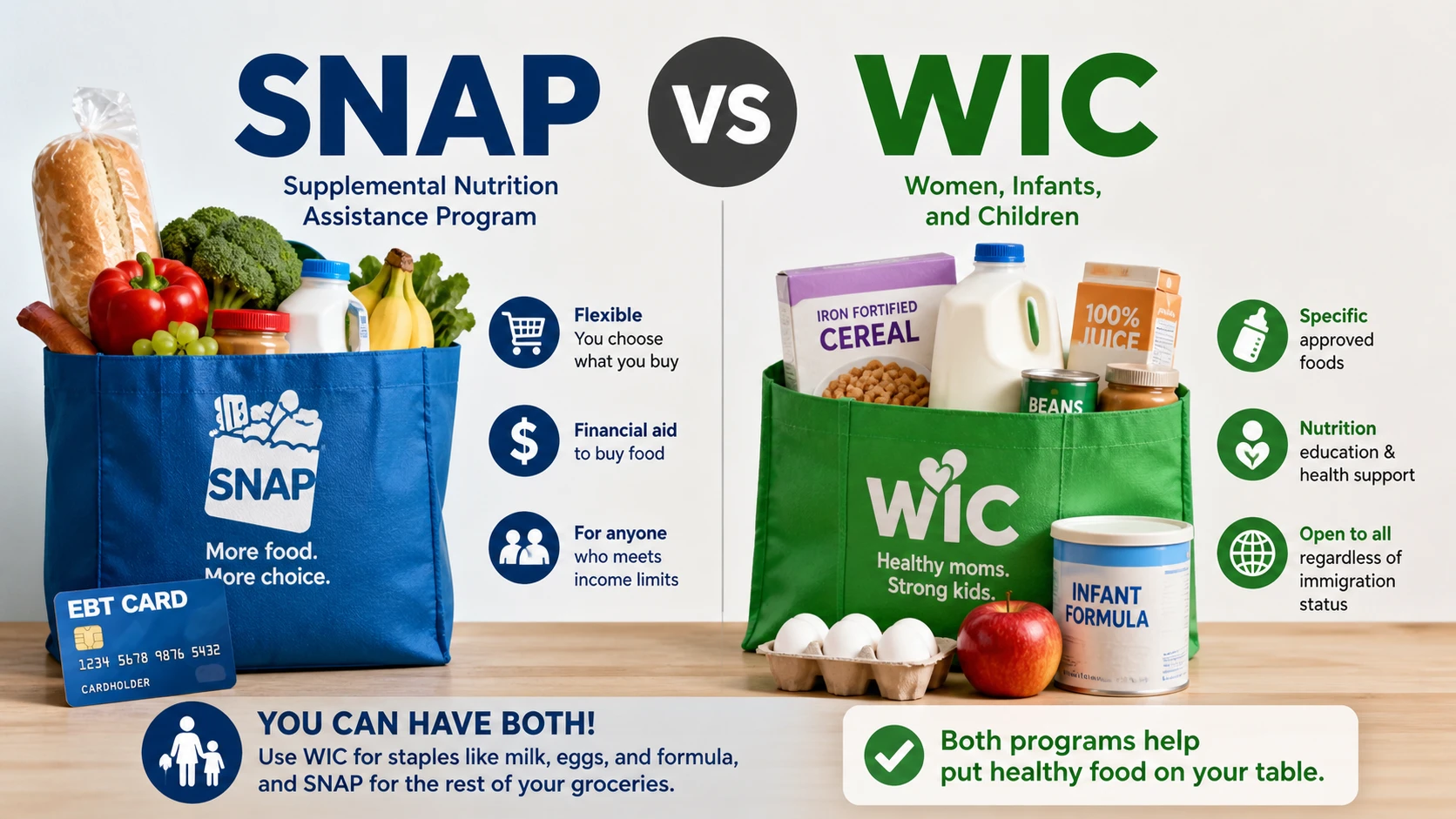
| Feature | SNAP | WIC |
|---|---|---|
| Who is it for? | Anyone who meets income limits. | Pregnant/nursing parents and kids under 5. |
| Flexibility | High – you choose the brands and items. | Low – you must buy specific approved items. |
| Services | Financial aid for food. | Food, nutrition classes, and healthcare referrals. |
| Immigration | Some restrictions apply. | Open to all, regardless of immigration status. |
Eligibility Requirements
For SNAP:
- Income: Your household’s gross monthly income must generally be at or below 130% of the federal poverty line.
- Resources: In some states, there are limits on the “countable resources” (like cash in a bank account) you can have.
- Employment: Some able-bodied adults may be required to work or participate in a work program to keep their benefits.
Related: SNAP Eligibility Requirements Income And Asset Limits Explained
For WIC:
- Categorical: You must be pregnant, breastfeeding, postpartum, or have a child under age five.
- Residential: You must live in the state where you apply.
- Income: Income must be at or below 185% of the federal poverty line (which is slightly higher and easier to qualify for than SNAP).
- Nutritional Risk: A healthcare professional must determine that you or your child are at “nutritional risk” (this is often as simple as a quick height/weight check or blood test at the WIC office).
Can You Have Both?
Yes! If you qualify for both, you can (and should) use both.
Many families use their WIC benefits to cover the “staples”—like formula, milk, eggs, and infant cereal—and then use their SNAP benefits to buy the rest of their groceries like meat, snacks, and fresh produce. In fact, if you already receive SNAP, you are often automatically “adjunctively eligible” for WIC, making the application process even faster.
The Bottom Line
SNAP is about quantity and choice, helping you buy enough food for the whole family. WIC is about quality and health, ensuring that moms and young children get the specific nutrients they need to grow.
Ready to apply? Visit your state’s Department of Human Services website to start your application today.
Frequently Asked Questions
Can I receive both SNAP and WIC at the same time?
Yes. Many families qualify for both programs simultaneously. In fact, if you are already enrolled in SNAP, you are often automatically considered “income-eligible” for WIC (a status known as adjunctive eligibility), which can make the WIC application process much faster.
Does getting WIC reduce the amount of SNAP I receive?
No. WIC benefits are not counted as income when determining your SNAP eligibility or benefit amount. You can use your WIC package to cover expensive staples like formula and milk, leaving more of your SNAP balance for other groceries.
What happens to my benefits if I move to a different state?
For SNAP: You generally must close your case in your old state and reapply in your new one, as eligibility rules vary. However, any balance remaining on your EBT card can still be used at authorized retailers anywhere in the country.
For WIC: Before you move, ask your current clinic for a transfer card. This allows your benefits to continue in the new state until your current certification period ends without needing a full re-evaluation.