- SNAP benefits can be used for most foods meant to be prepared and eaten at home
- Hot foods, alcohol, and nonfood items are not allowed
- Seeds and plants that grow food are eligible purchases
The Supplemental Nutrition Assistance Program helps millions of households stretch their food budgets and put nutritious meals on the table. While the program is flexible, it follows clear rules about what can and cannot be purchased. Knowing these rules can help you plan smarter grocery trips and avoid confusion at checkout.
Understanding SNAP Food Eligibility
SNAP is designed to support access to food that contributes to regular meals at home. The program focuses on staple foods and ingredients rather than prepared or ready-to-eat items.
In general, if an item is considered food for household consumption, it is likely eligible. The rules are consistent nationwide, even though individual stores may organize eligible items differently.
Eligible Foods You Can Buy with SNAP
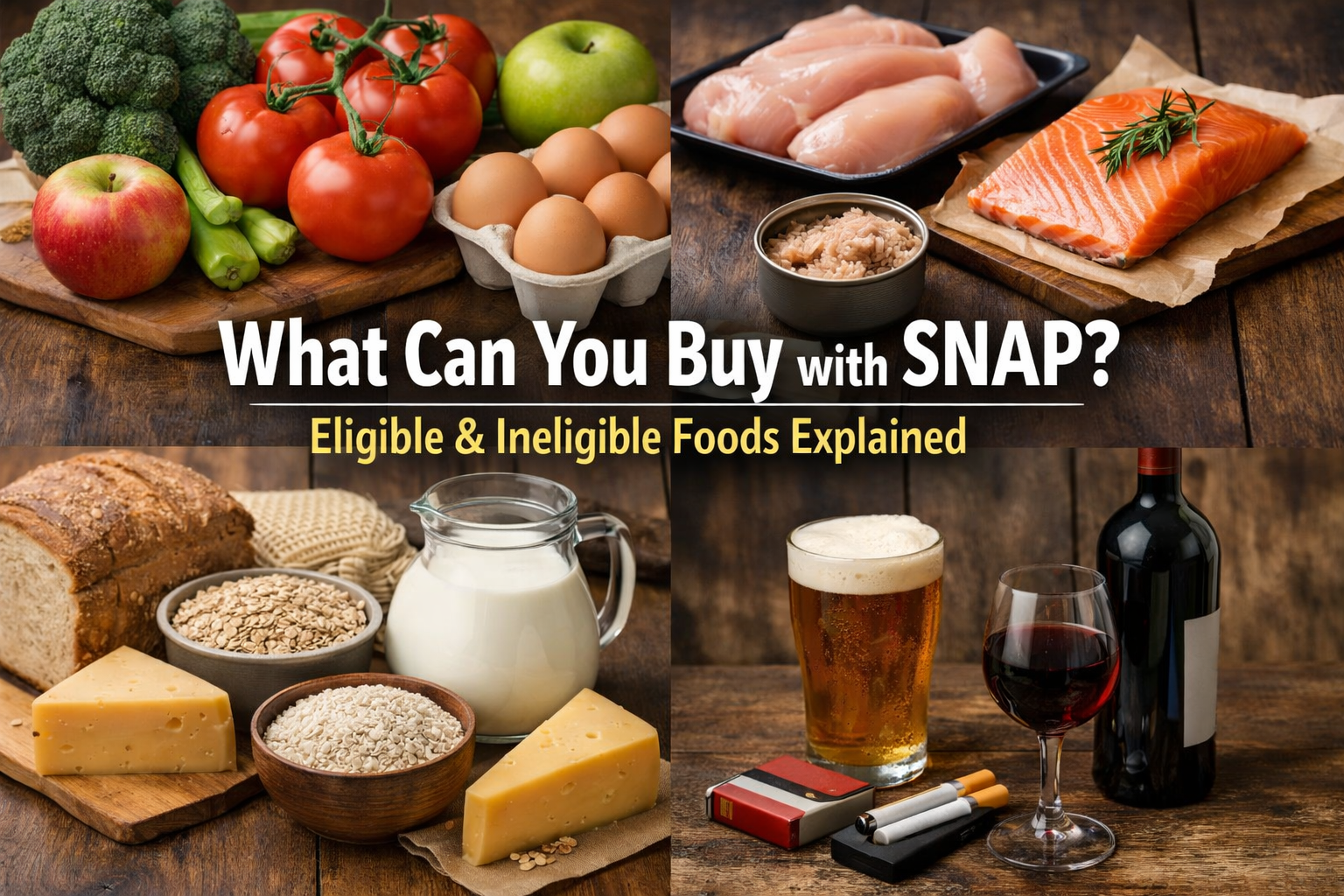
Most grocery store food items fall into this category. These foods are intended to be prepared or eaten at home and support daily nutrition.
Fruits and Vegetables
Fresh, frozen, canned, and dried fruits and vegetables are all allowed. This includes items with no added sugar, salt, or fat, as well as those with simple seasonings.
They can be whole, cut, packaged, or sold in bulk, giving shoppers flexibility across different budgets and preferences.
- Apples, bananas, and oranges
- Frozen mixed vegetables
- Canned beans and tomatoes
- Dried fruit without added ingredients
Meat, Poultry, and Fish
Protein foods are eligible as long as they are not hot or ready-to-eat at the time of purchase.
These items can be fresh, frozen, or canned, making it easier to plan meals ahead or stock up during sales.
- Fresh chicken, beef, and pork
- Frozen fish fillets
- Canned tuna or salmon
Dairy Products
Milk and dairy products qualify because they are considered essential household foods.
Both traditional and plant-based options are allowed, as long as they are sold as food items.
- Milk and yogurt
- Cheese
- Soy milk and other dairy alternatives
Bread, Grains, and Snack Foods
Staple carbohydrates and many packaged snack foods are eligible under SNAP rules.
While these items may not always be the most nutritious, they are still classified as food for home consumption.
- Bread, tortillas, and rice
- Pasta and cereal
- Chips, crackers, and cookies
Seeds and Plants That Produce Food
SNAP uniquely allows purchases that help households grow their own food.
This supports long-term food access and encourages home gardening.
- Vegetable seeds
- Herb plants
- Fruit-bearing plants
Ineligible Items You Cannot Buy with SNAP
Some items are excluded because they are not considered food or are meant for immediate consumption.
Understanding these exclusions can help avoid declined transactions and wasted time at checkout.
Hot and Prepared Foods
Foods that are hot at the point of sale are not allowed, even if they are otherwise food items.
This includes many deli and fast-food offerings.
- Hot rotisserie chicken
- Ready-to-eat hot pizza
- Heated soups from a deli counter
Alcohol and Tobacco Products
These items are strictly prohibited under SNAP rules.
They are not classified as food and cannot be purchased under any circumstances with benefits.
- Beer, wine, and liquor
- Cigarettes and vaping products
Vitamins, Medicines, and Supplements
If a product has a Supplement Facts label, it is not eligible.
SNAP only covers items with a Nutrition Facts label that are clearly sold as food.
- Multivitamins
- Protein powders labeled as supplements
- Herbal pills
Nonfood Items
Household supplies and personal care products are excluded, even though they are commonly sold in grocery stores.
These purchases must be paid for using another form of payment.
- Soap and shampoo
- Paper towels and toilet paper
- Pet food and cleaning supplies
Special Situations to Be Aware Of
Some items can cause confusion because they sit between eligible and ineligible categories.
For example, cold deli foods meant to be eaten later may be allowed, while the same foods sold hot are not. Gift baskets are only eligible if most of their value comes from food items that qualify under SNAP rules.
Making the Most of Your SNAP Benefits
Planning meals ahead of time and understanding store labels can help stretch benefits further.
Many stores clearly mark eligible items, and cashiers can usually help clarify questions. Knowing the rules before shopping reduces stress and helps ensure every purchase counts.
RELATED
SNAP Eligibility Requirements Income And Asset Limits Explained
How To Apply For SNAP Benefits: Step-By-Step Food Stamps Guide
Frequently Asked Questions
Can you buy Ensure with food stamps?
Yes. In most cases, you can buy Ensure with food stamps (SNAP/EBT) as long as the product is labeled with “Nutrition Facts” and not “Supplement Facts.” Most Ensure drinks qualify as eligible food items.
What can be bought with SNAP?
SNAP can be used to buy food and non-alcoholic drinks meant for home consumption, including fruits, vegetables, meat, dairy, bread, cereals, snacks, and beverages.
Can you buy protein powder with SNAP?
It depends. Protein powder can be bought with SNAP only if it has a Nutrition Facts label. If it has a Supplement Facts label, it is not SNAP-eligible.