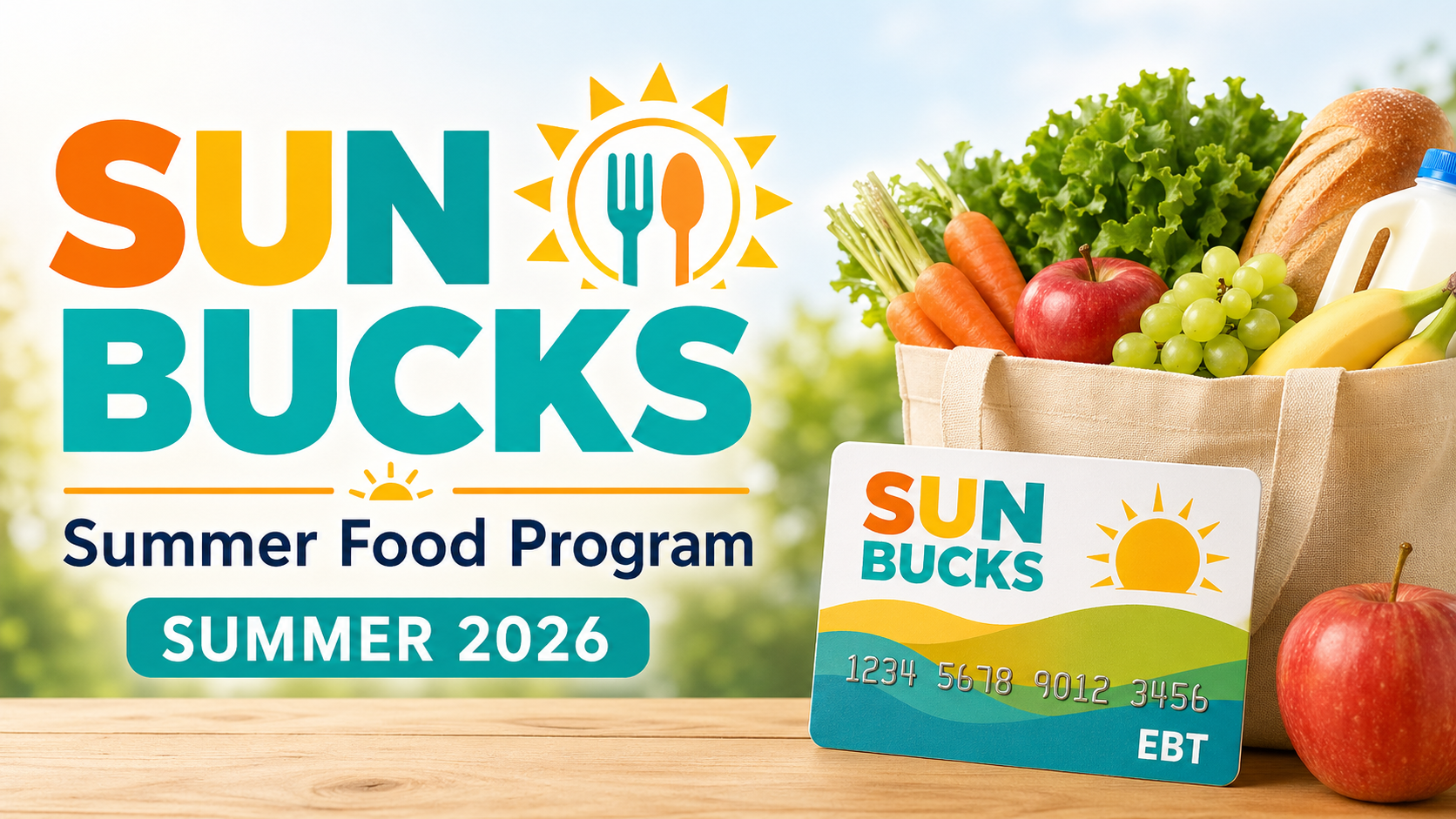
As the school year winds down, many parents start worrying about a common summer challenge: how to replace the free or reduced price meals their children receive at school. Thankfully, the SUN Bucks program (also widely known as Summer EBT) is returning for its third year in Summer 2026 to help families bridge the grocery gap.
Whether you are a returning beneficiary or applying for the first time, here is your comprehensive, up to date guide on SUN Bucks for Summer 2026, including eligibility, benefit amounts, and state participation.
What is the SUN Bucks Program?
SUN Bucks is a federal program designed to reduce child hunger during the summer break. When schools close, access to reliable daily meals disappears for millions of students. SUN Bucks provides grocery benefits directly to eligible families so they can purchase healthy food at approved grocery stores, farmers markets, and online retailers that accept EBT.
How Much Will You Receive in 2026?
For the Summer 2026 season, the standard benefit is $120 per eligible child. This covers the entire summer period and may be deposited as a single lump sum or split into $40 monthly deposits, depending on how your state manages the program.
Because the cost of living varies, families in certain areas will see higher benefit amounts:
- Contiguous US: $120 per child
- Hawaii: $189 per child
- Most US Territories (Guam, Puerto Rico, etc.): $180 per child
If you have multiple eligible children, the benefits stack. For example, a family in the contiguous US with three eligible children will receive $360 in total.
Eligibility Rules for Summer 2026
The qualification process is designed to be as seamless as possible, with millions of children receiving benefits automatically.
Automatic Enrollment
Most eligible children will automatically receive SUN Bucks and do not need to submit a separate application. Your child is likely auto enrolled if they are school aged and your household already participates in:
- SNAP (Supplemental Nutrition Assistance Program)
- TANF (Temporary Assistance for Needy Families)
- FDPIR (Food Distribution Program on Indian Reservations)
- Certain Medicaid programs
Applying Manually
If you do not receive the above benefits but still need assistance, you can apply directly through your state. Your household income must fall under 185% of the federal poverty limit. For example, in 2026, a household of three making less than $50,542 annually generally qualifies.
Participating and Non Participating States
While SUN Bucks is a federal program, it is administered at the state level, meaning states must opt in to run it.
New for 2026:
- Iowa is officially joining the Summer EBT program for the very first time!
- Utah, which participated last year, has opted out for 2026.
States Not Participating in 2026:
Currently, the program will not be available in the following states: Alaska, Florida, Georgia, Idaho, Indiana, Mississippi, Oklahoma, South Carolina, South Dakota, Tennessee, Texas, Utah, and Wyoming.
Note: If you live in Oklahoma, the state itself is not participating, but five tribal nations within Oklahoma are running their own programs. You do not need to be a tribal member to qualify, but your child must live on or attend school within tribal lands.
When and How Will You Get Your Benefits?
Benefits will generally start rolling out in late May or early June 2026, aligning with the end of the school year. The delivery method depends entirely on your state’s system:
- Existing SNAP EBT Card: Funds will be loaded directly onto your current card.
- Reloaded Summer EBT Card: Funds will be added to the physical card you received for the 2025 program.
- New Card by Mail: You will receive a fresh SUN Bucks card in the mail.
Crucial Next Step: If you have moved in the last year, update your mailing address with your child’s school district and your local SNAP office immediately! New cards and eligibility notices are sent to the address on file, and you do not want your benefits delayed.
If you are unsure about your status for Summer 2026, check your state’s official Department of Health and Human Services or SNAP website for the most accurate local deadlines and application portals.