
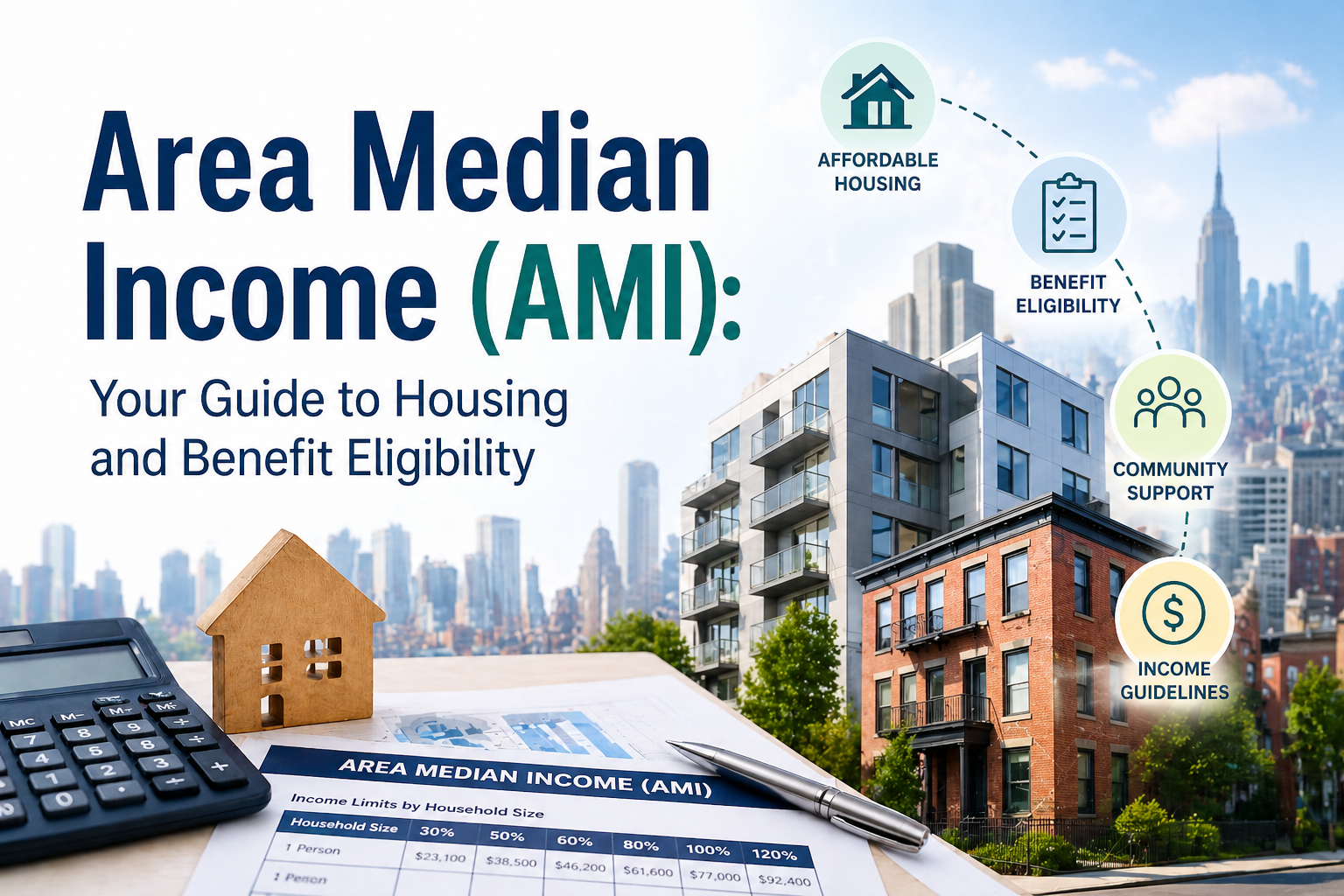
If you are exploring homebuyer assistance programs, or looking into rent subsidies, you have likely encountered the acronym AMI, which stands for Area Median Income, this single metric acts as the gatekeeper for millions of people seeking housing benefits and financial assistance.
But what exactly is AMI, how is it calculated, and most importantly, how does it impact your eligibility for housing programs? This guide breaks down everything you need to know about Area Median Income to help you navigate your housing journey with confidence.
What is Area Median Income (AMI)?
Area Median Income is exactly what it sounds like: the midpoint of a specific region’s income distribution.
If you were to line up every household in your county from the lowest earners to the highest earners, the household sitting exactly in the middle represents the median. Half of the households in the area earn more than this number, and half earn less.
Key Distinction
AMI is based on the median, not the average (mean). Averages can be heavily skewed by a few ultra-wealthy households in a region, making the number look much higher than what typical families actually earn. The median provides a much more accurate picture of everyday local earnings.
How is AMI Calculated?
In the United States, the Department of Housing and Urban Development (HUD) is responsible for calculating and updating AMI figures every year.
HUD relies on data from the Census Bureau’s American Community Survey (ACS). Recently, HUD updated its methodology. Instead of adjusting past census data for inflation using the Consumer Price Index (CPI), HUD now uses projected per capita wage growth from the Congressional Budget Office. This makes the AMI figures a more accurate reflection of actual local wages.
Because the cost of living varies wildly depending on where you live, HUD calculates a unique AMI for every metropolitan area and non-metropolitan county in the country. Furthermore, AMI is always adjusted for household size. A single person living alone will have a different income limit than a family of four, even if they live in the exact same county.
The AMI Tiers Explained
Housing programs do not just use the baseline 100% AMI figure. Instead, HUD divides income levels into specific tiers based on percentages of the area’s median income. These tiers determine exactly which programs you qualify for.
While specific local programs may have minor variations, federal housing programs generally categorize household income into the following tiers:
| Income Tier | Percentage of Local AMI | Common Eligibility Uses |
|---|---|---|
| Extremely Low Income | 0% to 30% | Prioritized for Section 8 Housing Choice Vouchers and public housing. |
| Very Low Income | 31% to 50% | Standard eligibility threshold for Section 8 and many specialized grant programs. |
| Low Income | 51% to 80% | Eligible for Low-Income Housing Tax Credit (LIHTC) properties and down payment assistance. |
| Moderate Income | 81% to 120% | Often eligible for workforce housing initiatives and specialized mortgage loans. |
Note: Some high-cost areas, like California or New York, may also include an “Acutely Low Income” tier (0% to 15% AMI) to address severe housing affordability crises.
Why Your AMI Matters
Your household income relative to your local AMI dictates your access to a wide variety of housing benefits. Here are the primary programs that rely on these calculations:
- Section 8 Housing Choice Vouchers: To qualify for federal rent assistance, your household generally must fall into the Very Low Income (50% AMI) or Extremely Low Income (30% AMI) categories.
- Affordable Housing Complexes (LIHTC): Privately owned apartment buildings subsidized by the Low-Income Housing Tax Credit usually restrict units to renters making 50% or 60% of the local AMI. Rents in these buildings are capped based on these AMI tiers, ensuring they remain affordable.
- Homebuyer Assistance Programs: If you are trying to buy a house, many state and local governments offer down payment assistance or closing cost grants to first-time buyers who earn 80% or less of the AMI.
- Specialized Mortgages: Fannie Mae, Freddie Mac, and the USDA offer specialized loans with lower interest rates and reduced mortgage insurance requirements for borrowers who fall below certain AMI limits (usually 50% to 80% AMI).
How to Find Your Local AMI
Because AMI changes every year and is strictly tied to your location and family size, you should never guess your AMI. You can find your exact, up-to-date figures directly through federal resources:
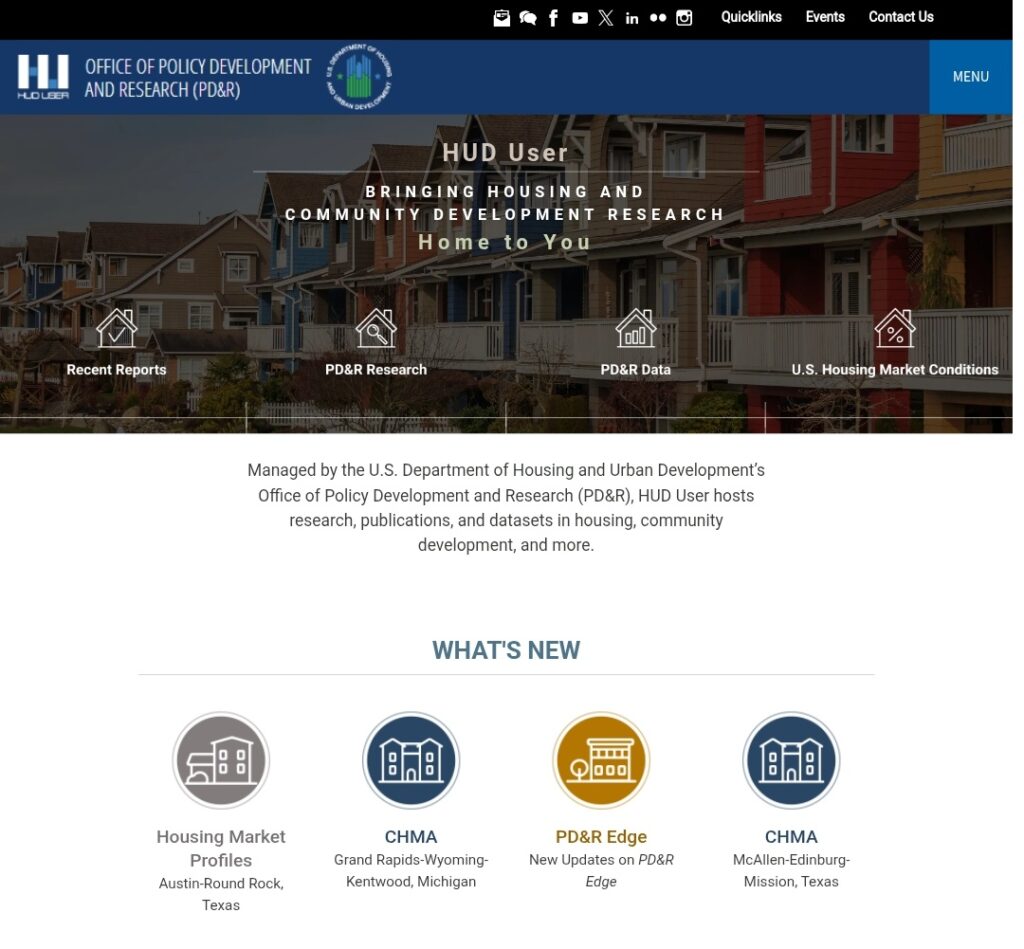
- Visit: HUD User portal. Navigate to the HUD Income Limits Documentation System.
- Select the current year: Click on the button for the most recent fiscal year.
- Enter your location: Choose your state and your specific county or metropolitan area.
- Check your household size: The tool will generate a chart showing the Exact Extremely Low, Very Low, and Low Income limits for your region, categorized by the number of people in your household.
By understanding your Area Median Income, you empower yourself to navigate the housing market effectively, ask the right questions, and apply for the benefits you are rightfully eligible to receive.