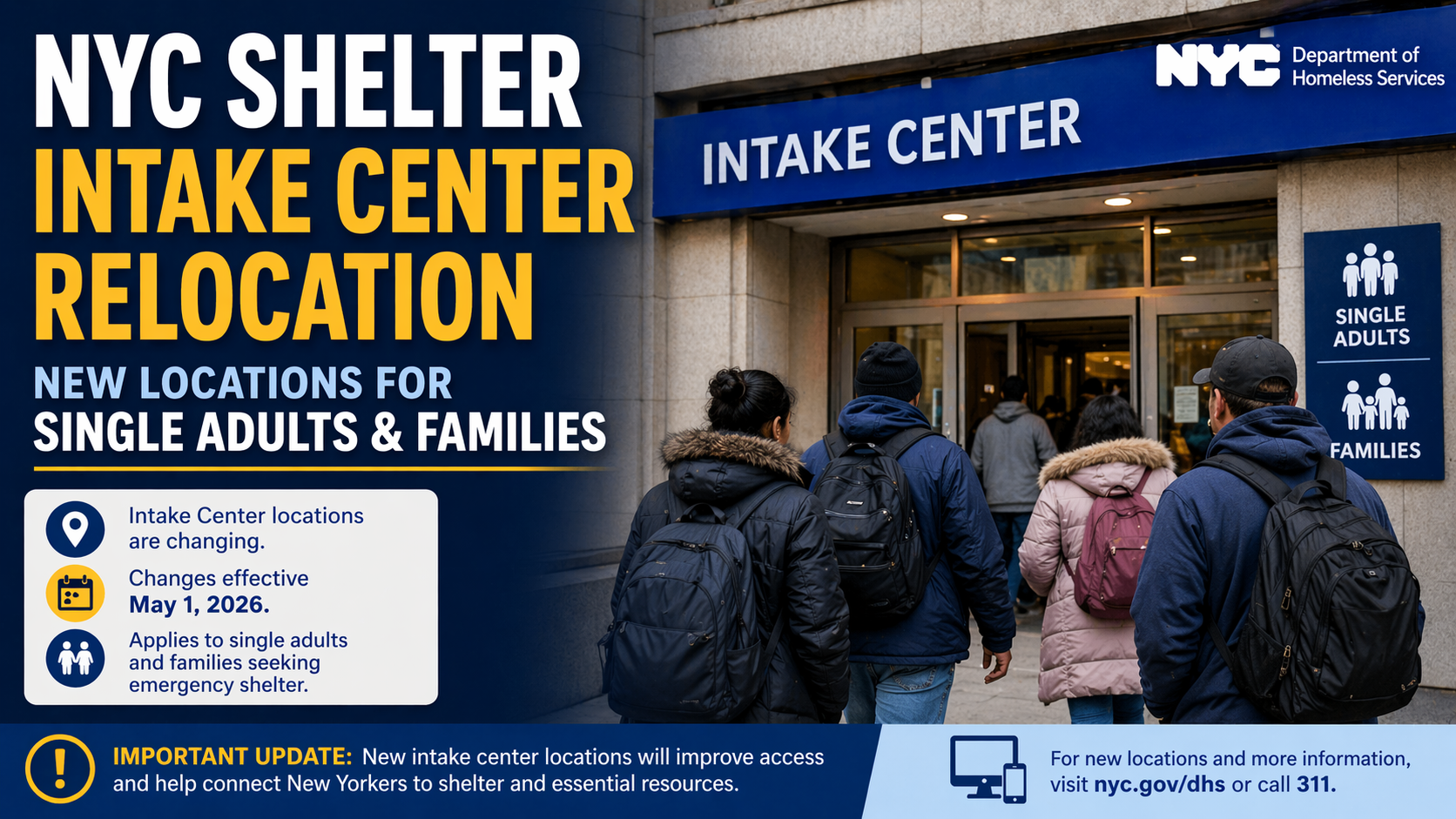
Facing homelessness in New York City is an undeniably daunting experience. It is a moment of profound vulnerability, often compounded by the dizzying bureaucracy of the city’s shelter system. If you or someone you love is navigating this reality, the very first step—finding the right intake center—is crucial. However, the landscape of New York City’s Department of Homeless Services (DHS) is actively changing.
As we navigate through the spring of 2026, a massive shift is underway in how and where single adults and families apply for emergency shelter. Intake centers are the literal gateways to emergency housing, and more importantly, they are the starting line for accessing permanent housing vouchers, supportive housing, and social services. Knowing exactly where to go, what documents to bring, and what to expect can mean the difference between a terrifying night on the streets and securing a safe bed.
In this comprehensive guide, we will break down the 2026 intake center relocations, the distinct processes for single adults versus families, and how these crucial first steps directly impact your long-term access to permanent housing.
The End of an Era: The Relocation of the 30th Street Intake Center
For decades, the sprawling facility at 400-430 East 30th Street in Manhattan has served as the primary intake point for single adult men and adult families. Often referred to colloquially as “30th Street” or “Bellevue” (due to its proximity to the hospital), this building has processed tens of thousands of New Yorkers during their most difficult moments.
However, due to the severe aging of the building’s infrastructure and the need for massive modernization, DHS announced earlier this year that the 30th Street Intake Center will officially relocate by May 1, 2026. This transition is currently underway. As of mid-March 2026, clients are no longer being placed in assessment beds at the 30th Street location, though the intake operations are remaining partially open in the interim through April 30. If you are entering the system now or planning for the future, you must be aware of the new dedicated intake locations.
Where Are the New Manhattan Intake Centers?
To ensure continuity of care, DHS has split the intake populations that previously relied on 30th Street into two separate, newly designated Manhattan locations:
- Single Adult Men’s Intake: Beginning May 1, 2026, all single adult men seeking shelter must go to 8 East 3rd Street, Manhattan. This new facility is designed to handle initial applications, immediate assessments, and will feature onsite shelter beds to prevent the frantic late-night transfers that historically plagued the 30th Street location.
- Adult Family Intake: Adult families (which we will define clearly in a moment) will now apply for shelter just around the corner at 333 Bowery, Manhattan.
The city’s goal with this relocation is to provide a more streamlined, dignified, and structurally sound environment for intake. However, anytime a massive bureaucratic system moves its headquarters, there is the risk of miscommunication. Outreach teams and DHS staff will temporarily remain at the old 30th Street site to redirect people, but spreading the word about these new addresses is vital.
The Shelter Pathway for Single Adults
New York is unique in that it operates under a “Right to Shelter” mandate, legally bound by the historic Callahan v. Carey decree. This means that the city must provide emergency shelter to anyone who meets the eligibility requirements and has no other safe place to sleep. However, the system is strictly segmented based on gender and family composition.
Single Adult Men
As noted, single adult men will now process through 8 East 3rd Street in Manhattan. The intake process is open 24 hours a day, 7 days a week, including holidays.
When a single man walks through the doors, he is not immediately assigned his permanent shelter. Instead, he enters an assessment period, which typically lasts about 21 days (though this can fluctuate based on system capacity). During this time, DHS case workers conduct medical, psychiatric, and social evaluations to determine the most appropriate official shelter placement. You might be transferred to an assessment shelter, or you might remain at the intake site’s beds during this period.
Single Adult Women
The intake process for single adult women has not been impacted by the 30th Street closure, but the locations are strictly defined and located outside of Manhattan. Single women have two options:
- Franklin Women’s Intake Shelter: Located at 1122 Franklin Avenue in the Bronx. It is important to note that the main entrance to Franklin has stairs. While there is an accessible side entrance, those with severe mobility impairments may prefer the alternative.
- HELP Women’s Center: Located at 114 Snediker Avenue in Brooklyn. This facility was recently updated and is fully ADA-accessible for individuals with physical disabilities or those who utilize wheelchairs.
The ILP and Housing Access for Singles
For single adults, entering the intake center is the first step toward getting out of the shelter system. Within days of your assessment, you will be required to develop an Independent Living Plan (ILP) with a caseworker.
This is a critical document. The ILP outlines the steps you must take to secure permanent housing, which includes applying for Public Assistance, actively searching for employment (if medically able), and saving a portion of any income you receive. Compliance with your ILP is heavily monitored. Under DHS “Client Responsibility” protocols, failure to comply with ILP requirements—such as missing scheduled appointments with housing specialists or refusing to save income—can result in temporary ejection from the shelter system for a minimum of 30 days.
Through your caseworker at the official shelter, you will gain access to housing subsidies, most notably CityFHEPS. Entering the intake center starts the clock on your shelter residency, which is often a metric used to prioritize individuals for supportive housing lotteries and housing vouchers.
Understanding “Adult Families” vs. “Families with Children”
One of the most confusing aspects of the NYC DHS system is how it defines a “family.” Showing up at the wrong intake center can cost you a full day of travel and immense frustration. The system divides families into two distinct categories: Adult Families and Families with Minor Children.
Adult Families (AFIC)
An Adult Family is defined as a family unit where there are no minor children (no one under 21 years old). This typically includes:
- Legally married couples without children.
- Domestic partners.
- Adult siblings who live together.
- A parent and a child who is over the age of 21.
As of May 2026, Adult Families must apply at the new facility at 333 Bowery, Manhattan.
The Challenge:
Proving you are an adult family can be notoriously difficult. DHS requires strict documentation to prove your relationship and that you have lived together consistently. If you are domestic partners, you will need a domestic partnership certificate. If you are adult siblings, you need birth certificates proving you share parents. You must also prove that you have resided together for the past year. If DHS deems that you do not meet the strict definition of an Adult Family, they will split you up and force you to apply as single adults at separate facilities.
Families with Minor Children (PATH)
If your family includes children under the age of 21, or if a member of the family is pregnant, you bypass the Manhattan intake centers entirely. You must apply for shelter at PATH (Prevention Assistance and Temporary Housing), located at 151 East 151st Street in the Bronx.
The PATH process is notoriously grueling and distinct from the single adult process. While single adults do not undergo a strict “eligibility” investigation on day one, families at PATH must legally prove they are homeless to be granted permanent shelter status.
The Two-Year Housing History:
When a family applies at PATH, DHS investigators will scrutinize your housing history for the past two years. You must account for exactly where you slept, who you lived with, and why you had to leave. If you stayed on a friend’s couch, DHS may call that friend and ask if you can return. If the friend says yes, or if DHS believes you have another safe housing option, you will be found “ineligible” for shelter.
Recent Compassionate Updates to the PATH Process:
In the past, families were forced to bring their children with them to the PATH intake center, resulting in kids missing school and sitting in crowded waiting rooms for 12 to 15 hours. Thankfully, the rules have evolved. Today, only the adult members of the family need to go in person to PATH for the initial application. You are no longer required to drag your minor children to the Bronx. Instead, DHS workers will ask to video call the children to verify they are in your care and safe while you handle the bureaucracy.
Furthermore, if your family is found “ineligible” (a heartbreaking reality for many), you do not necessarily have to pack up your temporary shelter placement and return to the Bronx in person immediately. You can now reapply over the phone from your conditional shelter placement the first time you are found ineligible.
The Critical Bridge: From Intake to Permanent Housing Access
The ultimate goal of entering an intake center is not to get a shelter bed; it is to get the keys to a permanent apartment. The shelter system is meant to be a temporary bridge, though systemic housing shortages often turn it into a prolonged stay. Your housing access begins the moment you complete intake.
1. CityFHEPS Vouchers
CityFHEPS (City Family Homelessness and Eviction Prevention Supplement) is the primary rental assistance program for New Yorkers in the shelter system. It helps families and single adults pay for rent in the private market.
Historically, individuals had to be in the shelter system for 90 days before they even became eligible to apply for CityFHEPS. Recent legislative pushes have attempted to dismantle these waiting periods, recognizing that forcing people to languish in shelters is both cruel and financially disastrous for the city. Once you clear intake and are placed in an official shelter, your housing specialist will begin compiling your CityFHEPS application. It is vital to ensure your Public Assistance (Cash Assistance) case is active, as this is intrinsically tied to your voucher eligibility.
2. Supportive Housing (The 2010e Application)
For individuals dealing with severe mental illness, substance use disorders, or chronic medical conditions, standard independent housing may not be enough. Supportive housing offers subsidized apartments with onsite social services, psychiatric care, and case management.
To access supportive housing, your shelter social worker must submit an HRA 2010e application. This requires a comprehensive psychosocial evaluation and a recent psychiatric evaluation. Intake centers often begin the preliminary steps of gathering this medical history. If you are relocating from 30th Street to the new 8 East 3rd Street facility, be hyper-vigilant about ensuring your medical records and prior psychosocial evaluations follow you to your new caseworker.
3. Affordable Housing Lotteries (Housing Connect)
While in the shelter system, clients are actively encouraged to apply for the NYC Housing Connect lotteries. A percentage of new affordable housing developments are specifically set aside for individuals currently residing in DHS shelters. Your intake profile and shelter residency status give you priority preference in these specific lotteries, bypassing the millions of other New Yorkers vying for affordable units.
4. SOTA (Special One-Time Assistance)
For families or individuals who have a verified source of income (like employment or SSI) but cannot afford New York City rents, DHS offers the SOTA program. SOTA pays for a full year of rent upfront for an apartment outside of New York City (often in New Jersey, upstate New York, or even out of state). Intake centers and assessment shelters often pitch this option early in the process to fast-track families out of the overburdened local system.
The Paperwork Arsenal: What You Must Bring
Walking into an intake center without documentation is like walking into a storm without an umbrella. While the city cannot legally deny you emergency shelter on the first night simply because you lost your ID, having the right documents will exponentially speed up your assessment, protect your family from being split up, and accelerate your housing voucher applications.
Treat this list as your bureaucratic arsenal. Gather as many of these as physically possible before heading to 3rd Street, Bowery, Franklin, or PATH:
Identity and Age Verification (For EVERY household member):
- Valid State ID, Driver’s License, or Non-Driver ID.
- Passports, Visas, or Green Cards.
- Birth Certificates (crucial for proving family composition at AFIC and PATH).
- Social Security Cards.
- Medicaid or Public Assistance (EBT/Benefit) Cards.
Housing History (Crucial for PATH):
- Leases or sublease agreements from the past two years.
- Eviction notices from a housing court or marshal.
- Utility bills (Con Edison, National Grid, internet, or phone bills) in your name to prove residency.
- A written, notarized letter from the person you were staying with, explicitly stating you can no longer live there and why.
Income Verification:
- Your most recent pay stubs (at least the last four).
- Proof of SSI, SSDI, or pension benefits.
- Unemployment benefit statements.
Keep these documents in a secure, waterproof folder. Never give away your only original copies of birth certificates or social security cards; insist that DHS staff make photocopies and hand the originals back to you.
Special Considerations: Youth, Drop-In Centers, and New Arrivals
The standard DHS intake centers are not the only avenues for vulnerable New Yorkers, and in some cases, they are not the safest or most appropriate.
Homeless Youth (Ages 24 and Under)
Young people often face unique dangers in adult shelters. Thankfully, there are specialized intake and shelter systems for youth.
- The Door in downtown Manhattan offers a safe haven, meals, and housing direction for teens and young adults.
- Covenant House (located on West 41st Street) operates a 24-hour emergency shelter specifically providing short-term housing, medical care, and case management for youth ages 16 to 20. You can stay for up to 72 hours even without a valid ID.
- The Ali Forney Center provides specialized emergency housing and drop-in intake specifically for LGBTQ+ youth (ages 16-24), a population disproportionately impacted by homelessness and often at high risk in standard adult facilities.
Drop-In Centers (DICs)
If you are street homeless and not ready or able to enter the formal shelter intake process, Drop-In Centers exist in every borough. These facilities do not offer traditional beds, but they provide hot meals, showers, clothing, resting chairs, and case management. You can walk into a DIC and speak to a housing specialist to begin the process of getting off the street without immediately committing to the regimented shelter system.
New Arrivals and Migrants
It is important to note that newly arrived migrants navigating the asylum process utilize a different initial intake system. New arrivals should visit the city’s dedicated Arrival Center, which processes humanitarian emergency placements. Unlike the standard DHS system, single adult new arrivals face strict 30-day or 60-day limits on their shelter stays before they must request an extension or find alternative housing.
Knowing Your Rights and Staying Resilient
The shelter system is inherently stressful, and the relocation of major centers like 30th Street will inevitably cause temporary confusion and bureaucratic friction. It is vital to know that you have rights within this system.
If you are at an intake center, you have the right to:
- Receive a shelter placement the same night you apply.
- A bed frame and a mattress (you cannot legally be forced to sleep on a floor).
- A locker and a lock to secure your belongings.
- Translation services and language access if English is not your primary language.
- A reasonable accommodation if you have a medical condition or disability (e.g., a bottom bunk, a first-floor room, or placement in an accessible facility like the HELP Women’s Center or a specialized medical shelter).
If you are facing immediate crisis at an intake center, if you are denied entry, or if you are found wrongfully “ineligible” at PATH, do not walk away in defeat. The Coalition for the Homeless operates a Crisis Intervention Hotline (1-888-358-2384), and the Legal Aid Society offers extensive housing support and legal representation for those fighting shelter denials.
Final Thoughts
The spring 2026 relocation of Manhattan’s primary intake services marks a significant logistical shift for New York City’s most vulnerable residents. Moving from the aging halls of 30th Street to the new facilities at 8 East 3rd Street and 333 Bowery is intended to offer a more dignified starting line. Yet, the physical address is only a small part of the journey.
Navigating the Department of Homeless Services requires immense patience, rigorous organization of your personal documents, and fierce self-advocacy. Whether you are a single adult waiting out your 21-day assessment, an adult family proving your bond, or a parent fighting for an eligible finding at PATH, remember that intake is just the beginning.
Engage heavily with your case workers, understand the rules of your Independent Living Plan, and aggressively pursue CityFHEPS and affordable housing lotteries. The intake center is a place no one wants to be, but with the right knowledge, it can be the exact place where your path to permanent, stable housing finally begins.