
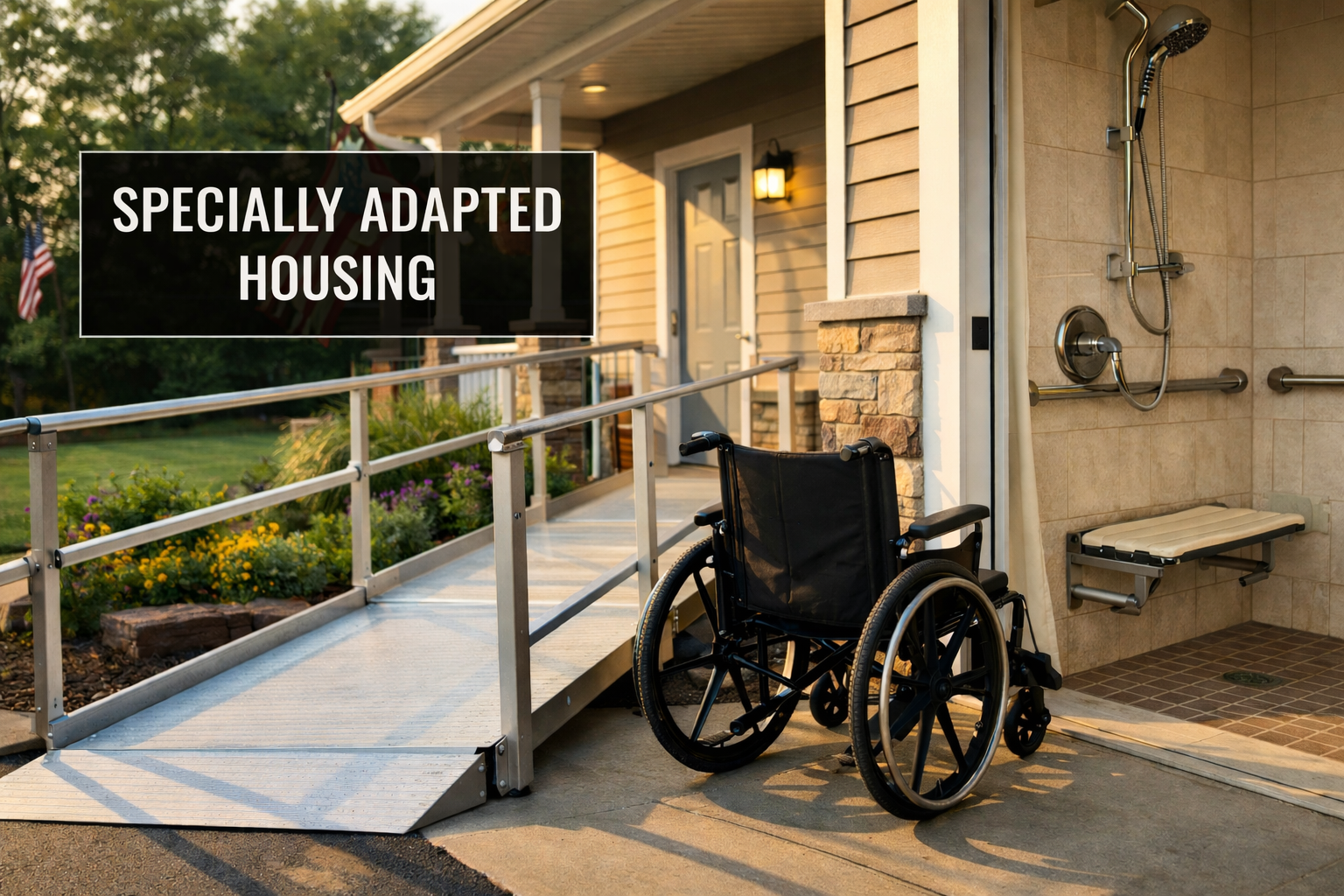
- Helps veterans with severe service-connected disabilities live safely at home
- Covers major home changes like ramps, wider doors, and bathroom redesign
- Based on medical eligibility, not income or credit score
- Follows strict federal safety and building rules
- Funds are released in steps to protect veterans during construction
- Grant limits are updated each year to reflect building costs
Specially adapted housing is a federal benefit that helps veterans with serious service-connected disabilities live more independently. Instead of giving general housing aid, this program pays for changes that remove physical barriers inside and outside the home.
The goal is simple. Make daily life safer and easier for veterans whose injuries affect movement, vision, or breathing. The program is managed by the U.S. Department of Veterans Affairs and follows strict legal and safety rules to protect both veterans and public funds.
What Is Specially Adapted Housing
Specially Adapted Housing, often called SAH, is a VA grant program. It helps eligible veterans:
- Build a new accessible home
- Remodel an existing home
- Adapt a home they plan to buy
- Make changes to a family member’s home where they live
This is not a loan. It does not need to be repaid. It is also not based on income. Approval depends on the severity of a service-connected disability.
The program focuses on long-term independence. It supports veterans who need full wheelchair access, improved balance support, or other major home adjustments.
Types of VA Housing Adaptation Grants
The VA offers different grant options based on the level of disability.
Specially Adapted Housing Grant
This is the largest and most comprehensive grant. It is designed for veterans with severe mobility or vision loss.
It can cover:
- Wheelchair accessible entrances
- Wider hallways and doors
- Roll-in showers
- Lowered countertops
- Accessible kitchens and bathrooms
Special Home Adaptation Grant
This grant is for veterans who need specific changes but not full home redesign.
It may help with:
- Bathroom safety updates
- Handrails and support bars
- Adapted lighting for low vision
- Changes to improve breathing safety
Temporary Residence Adaptation Grant
This option helps veterans who live temporarily in a family member’s home. It pays for needed changes during recovery or transition periods.
Who Qualifies
Eligibility is based only on service-connected disability status. Income and credit history are not considered.
To qualify, a veteran must have a permanent and total disability related to military service. Common qualifying conditions include:
- Loss or loss of use of one or both legs
- Loss or loss of use of certain arm functions
- Severe burns
- Certain types of blindness
- Serious balance or mobility problems
The VA reviews medical records and disability ratings before approving a grant. The condition must be long term and limit daily living activities.
Legal and Policy Foundation
Specially Adapted Housing is authorized under federal law in Title 38 of the United States Code. These laws define:
- Who qualifies
- How much funding is available
- How often a veteran can use the benefit
- What building standards must be met
For fiscal year 2026, funding limits were adjusted to reflect rising construction costs. This helps ensure grants remain useful in real housing markets.
The program operates under strict federal oversight because it involves large financial awards and home construction.
Building Standards and Safety Rules
Homes funded under this program must meet VA Minimum Property Requirements. These rules protect veterans from unsafe or poor-quality construction.
Standards cover:
- Safe entrances and exits
- Proper doorway width for wheelchairs
- Ramp slope measurements
- Bathroom layout and turning space
- Emergency access
In addition to accessibility, homes must meet general safety rules such as:
- Sound structure
- Safe electrical systems
- Working plumbing
- Healthy indoor air conditions
This protects veterans from investing in homes with hidden safety issues.
How Payments and Oversight Work
Funds are not paid all at once. The VA uses a step-by-step payment system.
- Builders complete part of the work
- The VA inspects the work
- Payment is released after approval
A portion of the money is held back until final inspection. This ensures the builder completes the project correctly.
This system protects veterans from unfinished or unsafe construction.
How It Works With Other VA Benefits
Specially Adapted Housing often works alongside other veteran support programs.
For example:
- Medical home modification programs may add treatment-related upgrades
- Independent living services may help with daily function tools
- Transportation support may assist with adapted vehicles
This coordinated approach helps veterans live more independently in all areas of life.
Why This Program Matters
Housing plays a major role in health, safety, and independence. For veterans with serious disabilities, small barriers inside a home can create daily risks.
Specially Adapted Housing removes those barriers. It provides:
- Greater independence
- Improved safety
- Long-term stability
- Better quality of life
Because this program involves large financial grants and permanent home changes, it is highly regulated. The rules protect both veterans and taxpayers while ensuring homes are safe and usable.
In 2026, updates to funding limits and administrative systems show continued commitment to meeting real construction costs and evolving veteran needs.
At its core, specially adapted housing is about dignity. It reshapes the living space so veterans can move freely, care for themselves, and live with greater comfort in their own homes.