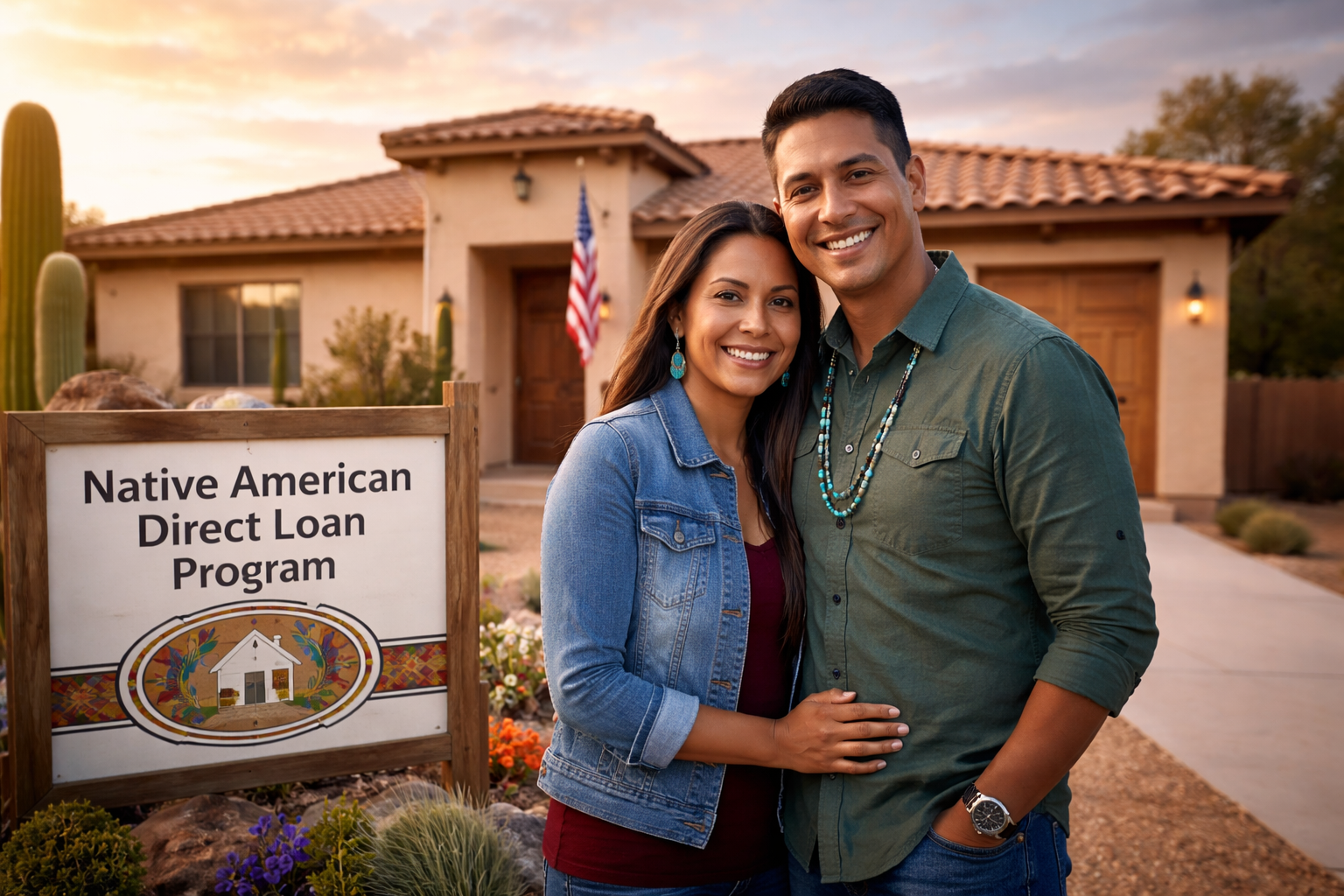
- The Native American Direct Loan Program is a specialized VA home loan designed for eligible Native American veterans and their families.
- It focuses on increasing access to safe and affordable homeownership on federal trust land.
- The program uses direct federal lending rather than private lenders to address long standing market gaps.
- Tribal participation through formal agreements is a core requirement for the program to operate.
- The NADL program combines veteran benefits with respect for tribal sovereignty and land status.
The Native American Direct Loan Program, often called the NADL Program, is a federal home loan benefit created to address a specific and persistent housing challenge. Many Native American veterans live on land that is held in trust by the federal government, which creates legal and financial barriers that traditional mortgage programs cannot easily overcome. As a result, even veterans who qualify for standard VA home loans may be unable to use them on trust land.
The NADL Program was established to provide a practical and lawful solution to this problem. Instead of relying on private lenders, the Department of Veterans Affairs serves as the direct lender. This structure allows eligible veterans to finance homes on trust land while respecting the legal protections placed on that land.
The program is designed to be conservative, transparent, and focused on long term housing stability. It is not a fast or casual lending option, but rather a carefully structured benefit that reflects both veteran service and tribal land realities. The information below explains how the program works, who it serves, and why it matters.
Overview of the Native American Direct Loan Program
The Native American Direct Loan Program is a housing benefit available through the Department of Veterans Affairs. It was authorized by Congress to help Native American veterans purchase, build, or improve homes on federal trust land. This includes land held in trust for tribes or individual Native Americans, as well as certain lands in Alaska and the Pacific Islands.
Unlike most VA home loans, the NADL Program does not involve a private bank or mortgage company. The VA provides the loan directly to the borrower. This structure exists because trust land cannot be used as collateral in the same way as privately owned property, which makes private lenders hesitant or unwilling to lend.
The program is intentionally narrow in scope. It does not apply to all veterans or all properties. Instead, it focuses on situations where standard housing finance systems have historically failed to serve Native American communities. By design, it prioritizes access and fairness over volume or speed.
From a policy perspective, the NADL Program represents a targeted response rather than a broad housing initiative. Its continued existence reflects an acknowledgment that equal access to benefits sometimes requires different tools for different legal and cultural contexts.
How direct lending differs from guaranteed loans
Most VA home loans operate under a guaranty model. In those cases, a private lender issues the loan and the VA guarantees a portion of it. This reduces risk for the lender but still requires property that can be foreclosed and sold on the open market.
Under the NADL Program, the VA does not guarantee a loan. It makes the loan. This distinction allows the VA to accept leasehold interests and other legal arrangements common on trust land. It also places responsibility for underwriting, servicing, and loss management directly with the federal government.
This approach reduces reliance on market driven decision making. It also allows the VA to align lending standards with the unique realities of tribal land ownership while maintaining responsible financial oversight.
Eligibility and borrower requirements
Eligibility for the Native American Direct Loan Program is based on both military service and Native American status. Applicants must be eligible for VA home loan benefits and must also be Native American or married to a Native American who holds an interest in trust land.
Native American status, for the purposes of the program, includes members of federally recognized tribes, Alaska Natives, Native Hawaiians, and certain Pacific Island populations. This definition is tied to federal recognition and land status rather than self identification alone.
In addition to heritage or marital status, the veteran must meet standard VA service requirements. These are documented through a Certificate of Eligibility, which confirms qualifying service and discharge conditions.
Financial qualification is also required. While the program is designed to be accessible, it is not automatic. Borrowers must demonstrate the ability to repay the loan based on income, existing obligations, and overall financial stability.
The role of tribal agreements
A critical requirement of the NADL Program is the existence of a formal agreement between the VA and the tribal government. This agreement, often called a Memorandum of Understanding, outlines how the program will operate within that tribal jurisdiction.
Without this agreement in place, the VA cannot issue NADL loans on that tribe’s trust land. The agreement addresses issues such as access for appraisals, dispute resolution, and procedures in the event of loan default.
This requirement ensures that tribal sovereignty is respected while also providing the VA with a clear legal framework to administer the loan. It also means that availability of the program can vary depending on tribal participation.
Loan features, costs, and consumer protections
The Native American Direct Loan Program offers loan terms that are intended to support long term affordability. Loans are typically fixed rate and may extend up to 30 years. In many cases, no down payment is required, which reduces the upfront cost of homeownership.
Interest rates are set by the VA rather than negotiated with a private lender. Historically, these rates have been competitive compared to conventional mortgages, which can provide meaningful savings over time for borrowers.
The program does include a funding fee, which helps offset administrative costs. However, certain borrowers, such as veterans with service connected disabilities, may be exempt from this fee.
Closing costs are limited and regulated, reducing the risk of excessive or unclear charges. From a consumer safety standpoint, this structure aligns with broader VA lending principles that emphasize transparency and borrower protection.
Use for purchase, construction, and improvement
NADL loans may be used for several housing purposes. Eligible borrowers can purchase an existing home, build a new one, or make improvements to a current residence on trust land.
Construction loans are particularly important in areas where housing supply is limited. The VA oversees the construction process to ensure that homes meet basic property and safety standards.
Manufactured and modular homes may also qualify, provided they meet federal requirements and are permanently affixed to the land. These options can be more practical in remote or rural areas, but they still require careful review and documentation.
Program impact and practical considerations
The Native American Direct Loan Program serves a relatively small population, but its impact can be significant. For many eligible veterans, it represents the only realistic path to homeownership on ancestral land.
By enabling veterans to remain in their communities, the program supports social stability, family continuity, and cultural connection. These outcomes are not easily measured in financial terms but are central to the program’s purpose.
At the same time, the program is complex. Application timelines can be longer than standard mortgages, and coordination between the VA, tribal authorities, and borrowers is essential. Understanding these realities helps set appropriate expectations.
From an educational and planning perspective, the NADL Program should be viewed as a long term housing solution rather than a quick financing tool. Veterans considering this option benefit from early engagement, accurate information, and patience throughout the process.
Balancing access and responsibility
The NADL Program reflects a balance between expanding access to benefits and maintaining responsible lending standards. It does not lower requirements simply to increase participation. Instead, it adapts requirements to fit a unique legal environment.
This balance is essential for sustainability. By combining careful underwriting with culturally informed policy design, the program seeks to serve veterans without exposing them or the public to unnecessary financial risk.
As housing needs evolve and tribal participation grows, the program may continue to change. However, its core purpose remains the same: providing a fair and workable home loan option for Native American veterans where traditional systems fall short.