
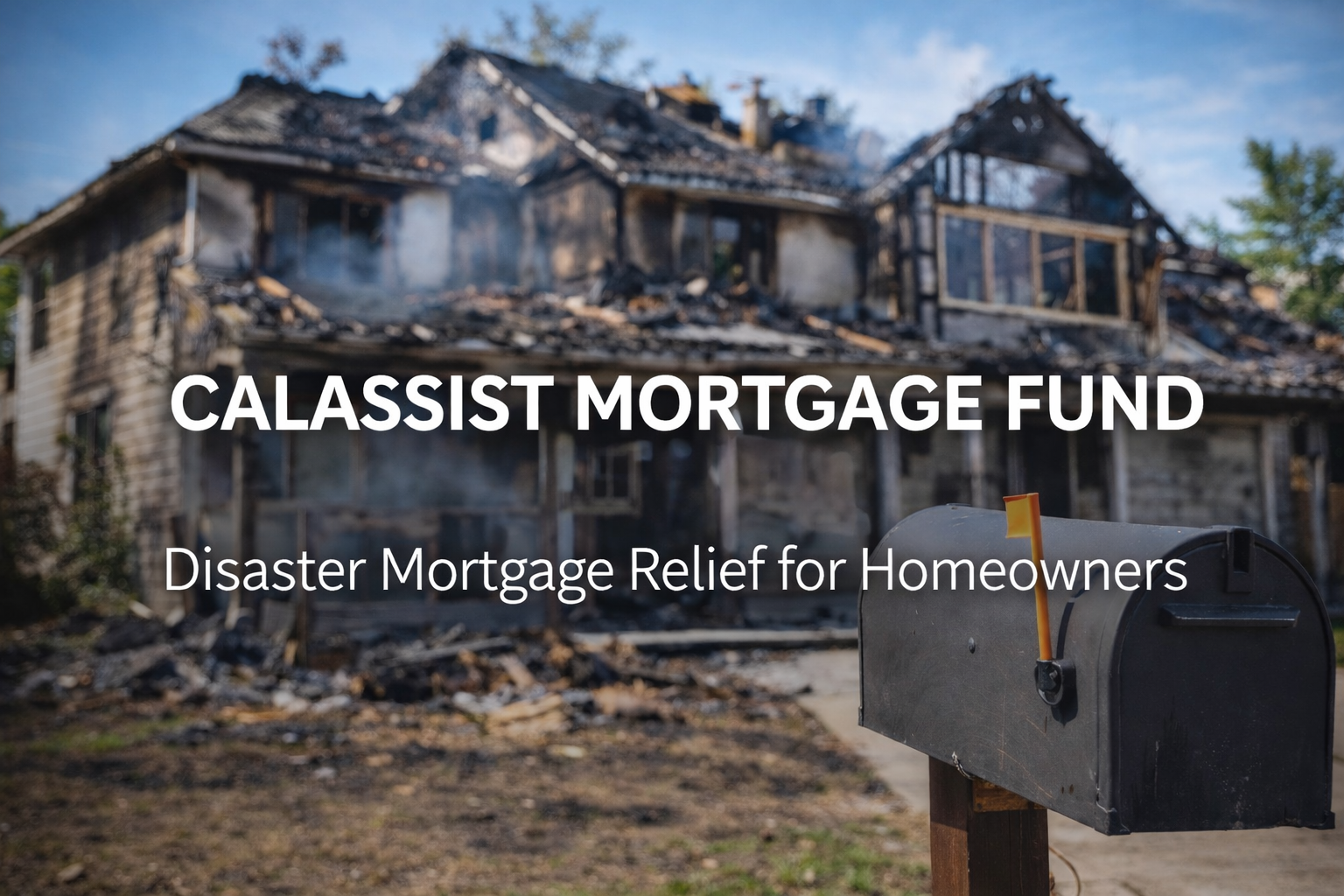
- CalAssist Mortgage Fund offers non repayable grants to disaster impacted homeowners
- Administered by the California Housing Finance Agency using National Mortgage Settlement funds
- Expanded in 2026 to provide up to 12 months and $100,000 in mortgage relief
- Applies only to primary homes that are destroyed or unlivable
- Works together with lender forbearance and state housing counseling programs
- Aims to prevent foreclosure and long term displacement after wildfires and floods
The CalAssist Mortgage Fund is a state run mortgage relief program created to help California homeowners after major natural disasters. It was designed to give direct financial support to families whose primary homes were destroyed or severely damaged by events like wildfires and floods.
The program is managed by the California Housing Finance Agency and uses funds from the National Mortgage Settlement. It provides grants, not loans. That means eligible homeowners do not have to repay the assistance.
What Is the CalAssist Mortgage Fund
The CalAssist Mortgage Fund is a disaster mortgage relief program for California homeowners.
Key features include:
- Non repayable grants
- Payments sent directly to mortgage servicers
- Help for homes that are uninhabitable due to qualified disasters
- Funded through National Mortgage Settlement dollars
The program was first launched in 2025 with $105 million in funding. It was later expanded in 2026 to increase both the length of assistance and the maximum dollar amount.
Unlike traditional disaster loans, CalAssist does not add new debt. This is important for families who are already dealing with insurance gaps, temporary housing costs, and rebuilding expenses.
Why the Program Was Created
California faces two major challenges:
- Frequent natural disasters such as wildfires and floods
- High housing costs and limited affordable inventory
Before CalAssist, many homeowners had to rely on:
- Federal disaster aid
- Insurance payouts that may not cover full rebuilding costs
- Personal savings or credit cards
These options often fall short. Delays in rebuilding can last months or years. During that time, families may have to pay:
- Their mortgage
- Rent for temporary housing
- Insurance deductibles
- Cleanup and debris removal costs
CalAssist was created to act as a financial bridge. It keeps homeowners current on their mortgage while they rebuild or relocate temporarily.
2026 Expansion: Bigger and Longer Relief
The original program provided:
- Up to 3 months of mortgage payments
- A maximum of $20,000 per household
In February 2026, the program expanded significantly.
New limits include:
- Up to 12 months of assistance
- A maximum of $100,000 per household
Income limits were also increased in some counties to reflect California’s high cost of living.
This expansion recognized that rebuilding often takes longer than three months due to:
- Permit delays
- Contractor shortages
- Insurance claim processing time
- Supply chain issues
The 12 month window gives families breathing room.
Who Is Eligible
Eligibility is strict and focused on primary homeowners who were financially stable before the disaster.
Property Requirements
The property must:
- Be located in California
- Be the homeowner’s primary residence
- Be destroyed or severely damaged and uninhabitable
Eligible property types include:
- Single family homes
- Condominiums
- Manufactured homes permanently attached to a foundation
- Up to four unit properties if the owner lived in one unit
Investment properties and vacation homes are not eligible.
Mortgage Status
Applicants must:
- Have an active mortgage or reverse mortgage
- Have been current or in good standing before the disaster
The program does not help homeowners who were already in long term default before the event.
Disaster Requirements
The damage must result from a qualified disaster between January 1, 2023 and January 8, 2025.
The event must have:
- A Governor proclaimed state of emergency
- Or a Presidential disaster declaration
Examples include major wildfires and floods during that period.
How the Money Is Paid
CalAssist payments go directly to the mortgage servicer.
For traditional mortgages, the grant can cover:
- Principal
- Interest
- Taxes
- Insurance
For reverse mortgages, it can cover:
- Property taxes advanced by the servicer
- Insurance premiums advanced by the servicer
This direct payment system reduces misuse and ensures funds are applied correctly.
Connection With Mortgage Forbearance
CalAssist works alongside lender forbearance programs.
After major disasters, many lenders offer:
- Temporary payment pauses
- Waived late fees
- Credit reporting protection
California also passed laws requiring certain mortgage protections for disaster survivors.
When combined:
- Forbearance pauses payments
- CalAssist covers payments during the pause
This reduces the risk of large lump sum repayment demands later.
Housing Counseling Support
The state set aside $25 million for housing counseling related to disaster recovery.
HUD approved counselors can help homeowners:
- Complete the CalAssist application
- Understand insurance and FEMA rules
- Avoid scams and predatory buyers
- Plan long term financial recovery
Counseling is highly recommended, even if not always mandatory.
Application Process
The program operates on a first come, first served basis.
Common required documents include:
- Most recent mortgage statement
- Government issued ID
- Recent bank statements
- Proof of income
- Utility bill from before the disaster
- Insurance or FEMA claim documentation
Applicants must show that the home was their primary residence and that they were financially stable before the disaster.
Accuracy and complete documentation are critical.
Economic and Community Impact
CalAssist is not just about individual relief. It also supports community stability.
When many homeowners default after a disaster:
- Neighborhood property values drop
- Local tax revenue declines
- Schools and public services suffer
By preventing foreclosure, the program helps:
- Preserve long term homeownership
- Stabilize neighborhoods
- Support rebuilding activity
- Reduce displacement
It also helps close the gap between insurance payouts and actual rebuilding costs.
How CalAssist Differs From Other CalHFA Programs
CalAssist is different from standard homebuyer programs offered by the California Housing Finance Agency.
For example:
- MyHome and Dream For All help with down payments
- Those programs are loans, often with repayment conditions
- CalAssist is a grant with no repayment requirement
CalAssist is designed for existing homeowners facing disaster loss. It is not a home purchase program.
Key Risks and Limitations
Homeowners should understand:
- Funding is limited
- Eligibility windows are fixed
- Relief ends after 12 months
- It does not replace full insurance coverage
After assistance ends, homeowners must have a clear plan for:
- Rebuilding completion
- Permanent housing solutions
- Resuming full mortgage payments
Professional advice from housing counselors, mortgage servicers, and financial planners may be helpful.
Final Thoughts
The CalAssist Mortgage Fund represents a major shift in how California handles housing recovery after disasters.
Instead of relying only on federal aid or private insurance, the state created a direct grant system to stabilize homeowners. By expanding the program in 2026 to provide up to 12 months and $100,000 in relief, policymakers recognized the real cost and time required to rebuild in California.
For eligible homeowners, CalAssist can mean the difference between rebuilding and foreclosure.
For communities, it helps protect neighborhoods from long term decline after wildfires and floods.