- U.S. military veterans have access to a wide range of housing assistance programs, including rental support, home loans, grants, and transitional housing.
- The Department of Veterans Affairs plays a central role through programs such as VA Home Loans, HUD-VASH, SSVF, and Grant and Per Diem housing.
- Veterans experiencing homelessness or housing instability can receive rental assistance combined with case management and supportive services.
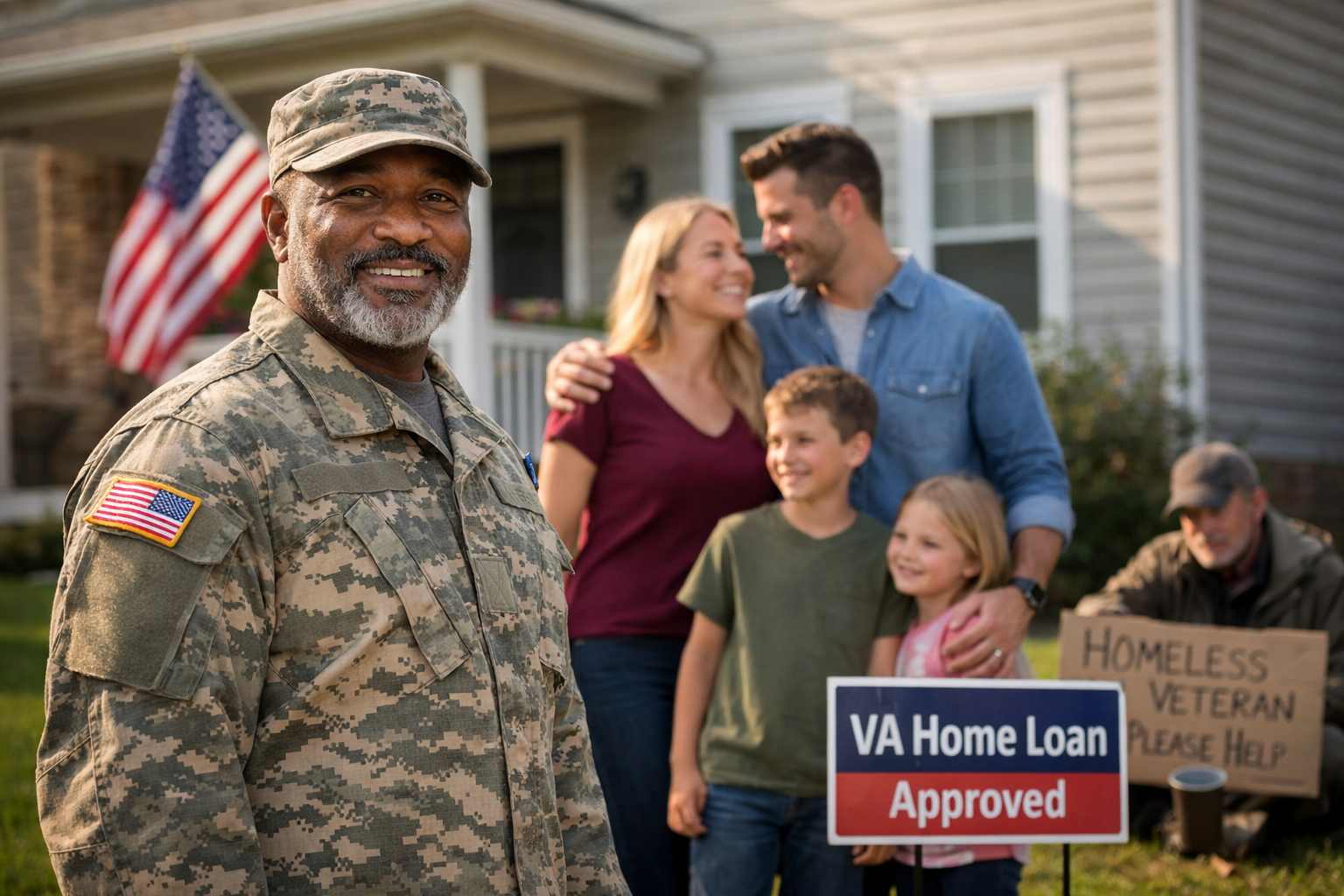
- VA-backed home loans help eligible veterans buy or refinance homes with benefits like low interest rates and little to no down payment.
- Disabled veterans may qualify for housing adaptation grants to modify homes for accessibility and long-term independence.
- Nonprofit organizations such as Operation Homefront, Volunteers of America, Habitat for Humanity, and the Salvation Army provide additional housing support nationwide.
- Many programs require veterans to work with VA medical centers, local housing authorities, or nonprofit providers to begin the application process.
- Veterans unsure where to start can contact VA’s homeless hotline or dial 211 to be connected with local housing resources.
Veterans and their families can access a wide range of housing programs, from rental subsidies and homeless support to home-buying loans and grants, offered by federal agencies and private organizations. Federal programs such as VA and HUD provide loans, vouchers, and transitional housing, often with supportive services. Nonprofit charities supplement these efforts with additional housing, case management, and counseling.
VA Home-Buying and Mortgage Assistance
1. VA Home Loan Guarantee: Purchase and Refinance Loans
The VA Home Loan program helps eligible veterans, service members, and some surviving spouses buy, build, or refinance a home with favorable terms. Through private lenders, the VA guarantees a portion of the loan, enabling lower interest rates, limited closing costs, and often no down payment or private mortgage insurance.
Eligibility: Generally requires an honorable discharge and minimum active-duty service, including National Guard and Reserve. Applicants must obtain a Certificate of Eligibility, COE, from VA.
How to apply: Apply through any VA-approved mortgage lender after securing a COE. Veterans can request a COE online at VA.gov or through their lender. For questions, contact VA Home Loans at 877-827-3702 or visit VA Home Loans.
2. Native American Direct Loan, NADL
A VA program for Native American veterans and certain non-Native spouses to buy, build, or improve homes on federal trust land. NADL offers the same benefits as a VA loan, including fixed low rates, no down payment, and no PMI.
Eligibility: Veteran, or veteran married to a Native American, whose tribal government has a VA agreement for loans on its trust lands; must have a VA COE and meet credit and income standards.
How to apply: Request a VA COE if needed and work with a participating lender. Contact NADL by email at NADL@va.gov or call 888-349-7541, TTY 711, Monday through Friday 8am to 6pm ET.
Related: Native American Direct Loan Program: Eligibility, Benefits, and How It Works
3. Specially Adapted Housing, SAH, and Special Housing Adaptation, SHA, Grants
VA offers grants to veterans with certain severe service-connected disabilities so they can buy, build, or modify a home to accommodate their needs. For example, a 100% disabled veteran who has lost use of two limbs, or is blind, may qualify for a SAH grant of up to approximately $126,526 in FY2026. Veterans with loss of use of both hands, severe burns, or certain respiratory injuries may qualify for a SHA grant of up to approximately $25,350 in FY2026. Veterans temporarily living in a family member’s home may use a Temporary Residence Adaptation grant to modify that home.
Eligibility: Must own, or will own, the home and have a qualifying service-connected disability listed on VA’s site.
How to apply: Submit VA Form 26-4555, Application in Acquiring Specially Adapted or Special Home Adaptation Grant, online or by mail to the VA Regional Loan Center. See VA.gov for details.
Federal Rental and Permanent Housing Assistance
1. HUD–VA Supportive Housing, HUD-VASH
A joint HUD and VA program offering Housing Choice Vouchers combined with VA case management to homeless veterans. HUD-VASH couples rental assistance with wrap-around supports such as healthcare and substance use treatment so homeless veterans and their families can obtain and sustain permanent housing.
Services: Vouchers subsidize rent in the private market; VA social workers link veterans to VA benefits and health services. Over 112,000 HUD-VASH vouchers have been allocated nationwide as of December 2023.
Eligibility: Must be a veteran eligible for VA healthcare and either homeless or at risk.
How to apply: Contact a VA homeless coordinator at your nearest VA Medical Center or call 877-4AID-VET, 877-424-3838, to be referred. VA screens for eligibility and makes referrals to the local public housing agency, PHA, which issues vouchers. Veterans must also qualify under HUD’s income rules.
2. HUD Housing Choice Voucher, Section 8
General federal rental assistance administered by HUD for low-income households, including veterans. Vouchers can be used in most privately owned housing.
Eligibility: Based on extremely low or very low income by area, household size, citizenship, and other HUD rules. Veterans, especially disabled veterans, often receive application preferences.
How to apply: Apply directly to your local PHA; find it via HUD’s PHA directory. Because demand is high, many PHAs maintain waitlists. If approved, the PHA issues a voucher for use within 60 to 120 days.
RELATED
Section 8 Housing Choice Voucher Guide: How to Apply, Eligibility & Waitlists (2026)
3. Supportive Services for Veteran Families, SSVF
A VA grant program implemented by nonprofit agencies to prevent homelessness or rapidly rehouse very-low-income veteran families. Through SSVF, providers offer outreach, case management, and short-term financial aid such as rent, utility, or move-in assistance to help at-risk veterans stay housed or move quickly into permanent homes.
Eligibility: Veterans and their families with very low income who are either literally homeless or at imminent risk of homelessness. SSVF grantees do not require VA disability; the focus is on income and risk.
How to apply: Veterans can call their VA liaison or visit a local VA Medical Center to be connected to SSVF, often run by groups like Volunteers of America. Alternatively, call VA’s homeless hotline at 877-4AID-VET or dial 211 for community referrals.
4. VA Grant and Per Diem, GPD, Program
VA funds community organizations to provide transitional housing and supportive services for homeless veterans. GPD is VA’s largest transitional housing program, supporting about 600 agencies with over 14,500 beds. Veterans enter GPD facilities, often dorm-like or apartment-style with support, for up to 24 months while they obtain skills, treatment, and stable income to move into permanent housing.
Services: Housing at VA-funded facilities plus daily supportive services such as case management, counseling, and job training.
Eligibility: Homeless veterans typically already connected to VA homeless programs who commit to a transitional program.
5. VA Domiciliary and Other Programs
How to apply: Veterans do not apply directly; eligibility is determined by VA staff or outreach. Contact your local VA Medical Center homeless coordinator or call 877-4AID-VET for referral.
VA also offers residential rehabilitation through domiciliary care for homeless veterans and outpatient programs. These are clinical in nature. The primary VA housing benefits for long-term stable housing remain HUD-VASH, Housing Choice Vouchers, SSVF, and GPD.
Nonprofit and Charitable Programs
1. Operation Homefront – Transitional Homes for Veterans
A national nonprofit that provides rent-free, two to three year transitional housing in apartments or single-family houses to honorably discharged veterans and their families within 10 years post-discharge. Residents work with caseworkers and financial counselors on education, employment, and budgeting to achieve self-sufficiency.
Eligibility: Honorably discharged service within the past ten years, with family ties or job or education opportunities near the home’s location. Applicants pay a small refundable program fee.
How to apply: Create an account on the Operation Homefront portal, My Operation Homefront, and apply online for available homes. Visit Operation Homefront’s housing page.
2. Operation Homefront – Permanent Homes for Veterans
This program gifts a mortgage-free home to veterans after they complete a two-year financial mentoring program. Over 690 families have graduated.
Eligibility: Honorably discharged veterans, including Guard and Reserve retirees; surviving spouses may also qualify. No combat or injury requirement.
Services: Case management and financial counseling throughout the two-year program to ensure veterans can sustain homeownership.
How to apply: Applications are submitted via the Operation Homefront portal, using the View Homes and Apply option.
3. Volunteers of America, VOA – SSVF and Housing Programs
VOA is a major nonprofit providing veteran housing assistance. It administers SSVF in many areas and runs shelters and transitional housing for veterans. VOA reports serving over 10,000 homeless veterans annually through these programs. Services include rapid rehousing and homelessness prevention with case management, housing search assistance, and short-term aid.
How to apply: Contact a local VOA office or your VA social worker. Many VOA affiliates have dedicated SSVF or veteran housing teams. Use VA’s homeless call line or 211 for local referrals.
4. Habitat for Humanity – Veterans Build and Repair Corps
Habitat partners with local affiliates to assist veteran families. Through Veterans Build, veterans can access Habitat’s homeownership opportunities for building or renovating a home. Repair Corps, in partnership with Home Depot, provides critical home repairs to disabled or low-income veteran homeowners.
Eligibility: Varies by local affiliate, generally low-income veterans with a need for affordable housing or repairs.
How to apply: Contact your local Habitat affiliate at Habitat.org or check Habitat’s Veterans Build page. Affiliates manage their own applications.
5. Salvation Army – Veterans and Family Centers
The Salvation Army operates Veterans and Family Centers that provide transitional housing in many regions. For example, the Portland, Oregon center provides transitional housing for up to nine months plus meals and intensive case management for veterans and their families.
Eligibility: Served on active duty and completed basic training, and are at risk of homelessness.
Services: Safe housing, counseling, job training, addiction programs, and on-site permanent sober housing units.
How to apply: Many centers have their own intakes. Call the Salvation Army Veterans and Family Center hotline at 800-858-7126 or contact the local program director via SalvationArmyUSA.org.
6. U.S. VETS, United States Veterans Initiative
A nonprofit with nationwide reach that provides emergency shelters, transitional housing, and permanent supportive housing for veterans. They also run programs such as SSVF and case management.
How to apply: Veterans can call 877-548-7838 or visit a U.S. VETS site for intake and eligibility. USVETS.org lists locations.
7. Other Nonprofits and Local Programs
Many local charities and churches offer housing help to veterans, including Catholic Charities, local Volunteers of America affiliates, HUD-VASH partner organizations, veteran service organizations such as VFW and American Legion, and community action agencies. The National Coalition for Homeless Veterans can also connect veterans to local resources. Veterans should check VA and HUD websites or dial 211 for local nonprofit housing programs.
Key Program Comparison
| Program | Sponsor | Type of Support | Who’s Eligible | How to Apply / Contact |
|---|---|---|---|---|
| VA Home Loan Guarantee | U.S. Dept. of Veterans Affairs | Home mortgage loan, purchase and refinance, often no down payment. | Veterans, active duty, Guard and Reserve with minimum service and good credit. | Apply through any VA-approved lender after obtaining a VA COE. Contact VA Home Loans at 877-827-3702 or visit VA.gov/homeloans. |
| Native American Direct Loan | VA | Home mortgage to buy or build on tribal trust land, no down payment. | Native American veterans or spouses with tribal MOU and VA COE. | Obtain a VA COE and work with a participating lender. Email NADL@va.gov or call 888-349-7541, TTY 711. |
| Specially Adapted Housing and Special Home Adaptation Grants | VA | Home purchase, construction, or adaptation grants, up to approximately $126k for SAH and $25k for SHA. | Veterans with qualifying service-connected disabilities who own or will own the home. | Apply with VA Form 26-4555. See VA.gov for details. |
| HUD-VASH | HUD / VA | Rental vouchers plus VA case management for permanent housing. | Homeless veterans eligible for VA healthcare. | Contact VA homeless coordinator or call 877-424-3838 for referral to local PHA. |
| Housing Choice Voucher, Section 8 | HUD | Rental vouchers for privately owned housing. | Low-income families and individuals, including veterans. | Apply at your local PHA via HUD’s directory; waitlists are common. |
| SSVF | VA, administered by nonprofits | Short-term rental and utility assistance plus case management for prevention or rapid rehousing. | Very-low-income veterans and families who are homeless or at imminent risk. | Contact VA at 877-424-3838 or dial 211 for referrals to local SSVF providers. |
| VA Grant & Per Diem | VA | Transitional housing beds and supportive services for up to 24 months. | Homeless veterans referred by VA staff. | VA referral via local VA Medical Center homeless coordinator or 877-424-3838. |
| Operation Homefront – Transitional Homes | Operation Homefront | Rent-free temporary housing for two to three years plus education and case management. | Honorably discharged veterans within ten years of discharge. | Create an account and apply via My Operation Homefront. |
| Operation Homefront – Permanent Homes | Operation Homefront | Mortgage-free homes after a two-year prep program plus counseling. | Honorably discharged veterans and eligible surviving spouses. | Apply online via Operation Homefront. |
| Volunteers of America | Volunteers of America | Rapid rehousing, prevention, and transitional housing, often via SSVF. | Low-income or homeless veterans. | Contact local VOA affiliate or dial 211. |
| Salvation Army – Veterans & Family Center | Salvation Army | Transitional supportive housing with on-site services. | Veterans who completed basic training and are at risk of homelessness. | Call 800-858-7126 or visit SalvationArmyUSA.org for local info. |
Bottom Line
Military veterans in the United States have access to a broad network of housing assistance programs that support renting, homeownership, and long-term housing stability. Through the Department of Veterans Affairs, HUD, and trusted nonprofit organizations, veterans can receive financial help, case management, and supportive services tailored to their needs. Whether facing homelessness, seeking affordable rental housing, or working toward homeownership, veterans have multiple pathways to secure safe and stable housing by connecting with VA services or local housing providers early.