For millions of Americans, the Electronic Benefit Transfer (EBT) card is more than just a piece of plastic; it is a vital tool for food security. However, federal policies have changed a lot over the past year. As a result, the rules about what you can and cannot buy are now more complicated.
Whether you’re a first-time recipient learning how the system works or a long-term participant adapting to the 2025 budget changes, understanding the details of the SNAP-eligible list is key to making your benefits last through the month.
Table of Contents
The “Household Food” Rule
At its core, the U.S. Department of Agriculture (USDA) defines SNAP-eligible items as “foods intended for household consumption.” While this may seem straightforward, many shoppers run into confusion at checkout when distinguishing between a basic food item and a prepared meal.
The Staples: Fresh, Frozen, and Canned
SNAP benefits are primarily designed to cover staple foods that form the backbone of a household’s diet. This includes fresh produce like fruits and vegetables, frozen items such as meats and vegetables, and canned goods ranging from beans to soups. These options are all considered eligible because they are basic food items meant to be prepared and eaten at home.
The key idea is that these foods are not ready-to-eat in the way a hot meal or deli item is. Instead, they require some level of preparation, storage, or cooking, making them essential for building affordable, long-lasting meals throughout the month.
1. Produce: Fresh Fruits and Vegetables
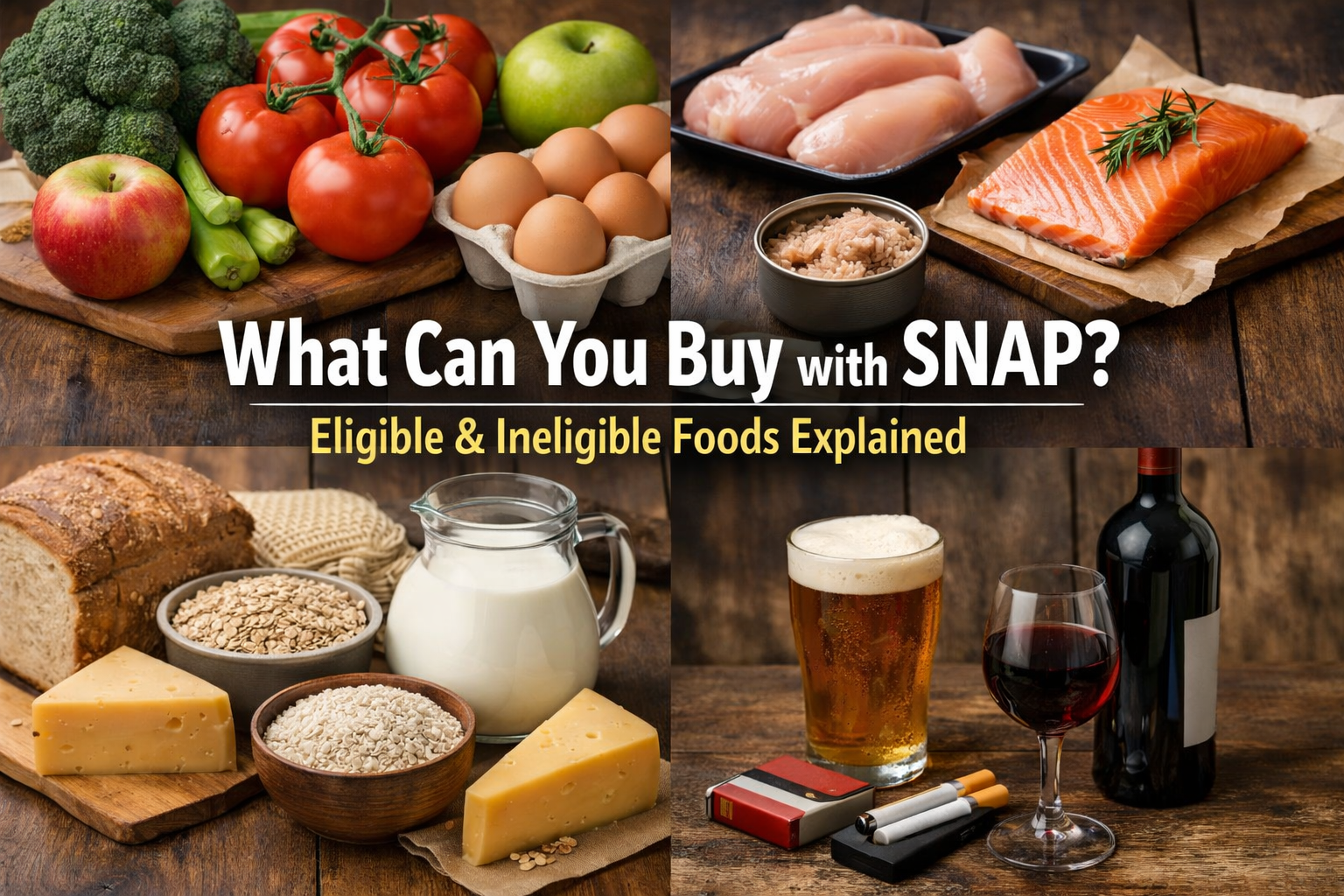
All fresh fruits and vegetables are SNAP-eligible, making them one of the most important and flexible categories for everyday nutrition. From apples and bananas to leafy greens and root vegetables, anything in its natural, unprepared state qualifies.
In 2026, many states have expanded “Double Up Food Bucks” programs. These initiatives allow you to stretch your benefits further—for example, spending $10 of SNAP at participating farmers’ markets or local grocery programs can give you an additional $10 specifically for fresh produce.
2. Proteins: Meat, Seafood, and Plant-Based Options
SNAP covers a wide range of protein sources, including red meat, poultry, fish, and plant-based options like tofu, lentils, and beans. Whether fresh, frozen, or canned, these items are eligible because they are intended to be prepared and eaten at home.
Even premium choices—such as shellfish or higher-end cuts of meat—are still eligible under SNAP rules. However, shoppers looking to stretch their benefits often get better value by choosing bulk frozen meats, dried beans, or lower-cost cuts, which can provide more servings for the same amount of money.
3. Dairy: Traditional and Plant-Based Options
Plant-based alternatives—such as almond, soy, or oat milk—are also fully covered, as long as they’re intended for household consumption. This makes it easier for people with dietary preferences or lactose intolerance to find suitable options without sacrificing their benefits.
4. Grains: Everyday Pantry Essentials
SNAP benefits cover a wide range of grain products that form the base of many meals. This includes bread, cereal, pasta, flour, and rice—whether packaged, boxed, or in bulk.
These items are staples because they’re versatile, affordable, and have a long shelf life. From making sandwiches and breakfast bowls to preparing full meals like pasta dishes or rice-based recipes, grains help stretch your budget while keeping meals filling and consistent.
The “Surprise” Eligibles: Seeds and Plants
One of the most underutilized aspects of SNAP, especially important given the 20% federal funding reduction in 2025 is the ability to buy seeds and food-producing plants.
You can use EBT to buy tomato starts, herb pots, or packets of vegetable seeds.
Expert Tip: For every $1 spent on seeds, a household can produce approximately $25 worth of fresh produce. If you have a windowsill or a small backyard, this is the single best way to combat benefit inflation.
Snacks and Beverages
Contrary to some myths, SNAP does not restrict “junk food.” You can purchase:
- items like crackers, cookies, ice cream, and candy are generally eligible, unless you live in one of the 18 states that have implemented specific bans on sugary snacks for 2026.
- Energy Drinks: These are eligible only if they have a “Nutrition Facts” label. If the can has a “Supplement Facts” label, it is classified as a health supplement and is prohibited.
What You Cannot Buy
Using SNAP for prohibited items can lead to “trafficking” charges or disqualification from the program.
1. The “Hot Food” Prohibition
The most common point of confusion is the Hot Food Rule. SNAP cannot be used to buy food that is sold hot at the point of sale.
- NO: Rotisserie chickens (if hot), hot pizza slices, or soup bar items.
- YES: Cold rotisserie chickens (found in the refrigerated section), “take-and-bake” cold pizzas, or cold sandwiches.
2. Alcohol, Tobacco, and Non-Food Items
The federal government remains strict on “vice” and household utilities. You cannot use SNAP for:
- Beer, wine, or liquor.
- Cigarettes or vaping products.
- Pet food (this is a frequent pain point for families).
- Cleaning supplies, paper towels, or toilet paper.
- Hygiene products (diapers, soap, shampoo).
3. Supplements and Medicines
If an item has a “Supplement Facts” label—common for protein powders, vitamins, and certain herbal teas—it is considered a drug/supplement by the FDA and is ineligible for SNAP.
2026 Policy Update
As of the 2025 fiscal year, the One Big Beautiful Bill Act introduced tighter oversight on “luxury” items in some pilot states, though a federal ban on specific “luxury foods” (like steak or seafood) has not yet been implemented nationwide.
However, the expanded work requirements (now affecting adults up to age 65) mean that many recipients are seeing their benefits fluctuate. If your benefits have been reduced, focusing on dry rice, lentils, and frozen vegetables is the most effective strategy to maintain nutritional density.
The “Restaurant Meals Program” (RMP) Exception
While hot foods are generally banned, there is a major exception for specific populations. If you are elderly (60+), disabled, or experiencing homelessness, your state may participate in the Restaurant Meals Program.
In participating states (like California, Arizona, and Illinois), eligible individuals can use their EBT card at authorized restaurants like Subway or Domino’s for hot, prepared meals. Check your state’s local social services portal to see if you qualify for this designation.
Shopping Strategies
We recommend these three shopping habits:
- The “Unit Price” Check: Always look at the small text on the shelf tag that shows the “price per ounce” or “price per pound.” Buying a larger bag of rice might cost more upfront but saves 30% of your benefit over the month.
- Stacking Discounts: You can use manufacturer coupons and store loyalty cards alongside SNAP. If a store has a “Buy One, Get One Free” sale, your EBT card will cover the paid item, and you get the second for free.
- Online Integration: Most major retailers, including Amazon, Walmart, and Target, now accept EBT online. This is a game-changer for those with limited transportation, though note that SNAP cannot pay for delivery fees. You will need a secondary payment method for the shipping cost.
Also Read: Online Grocery Shopping with SNAP EBT: Eligible Retailers and How It Works
Conclusion
In 2026, using SNAP requires more strategy than ever. While the list of eligible items remains broad—covering most grocery staples except hot prepared foods and alcohol—reduced overall funding means shoppers must be more intentional than ever. Stretching benefits now depends on careful planning, smart choices, and making food last through the month.
Frequently Asked Questions
Can I use SNAP to buy fresh, frozen, or canned produce?
Yes, you can purchase all types of fruits and vegetables, including fresh, frozen, canned, or dried varieties.
Can I buy seeds and plants to grow my own food?
Yes, you can purchase seeds and food-producing plants (like tomato starts or herb pots) to grow vegetables, fruits, and herbs for your household.
Are vitamins and protein powders eligible?
No, any item with a “Supplement Facts” label, such as vitamins, minerals, or certain health supplements, is strictly prohibited.