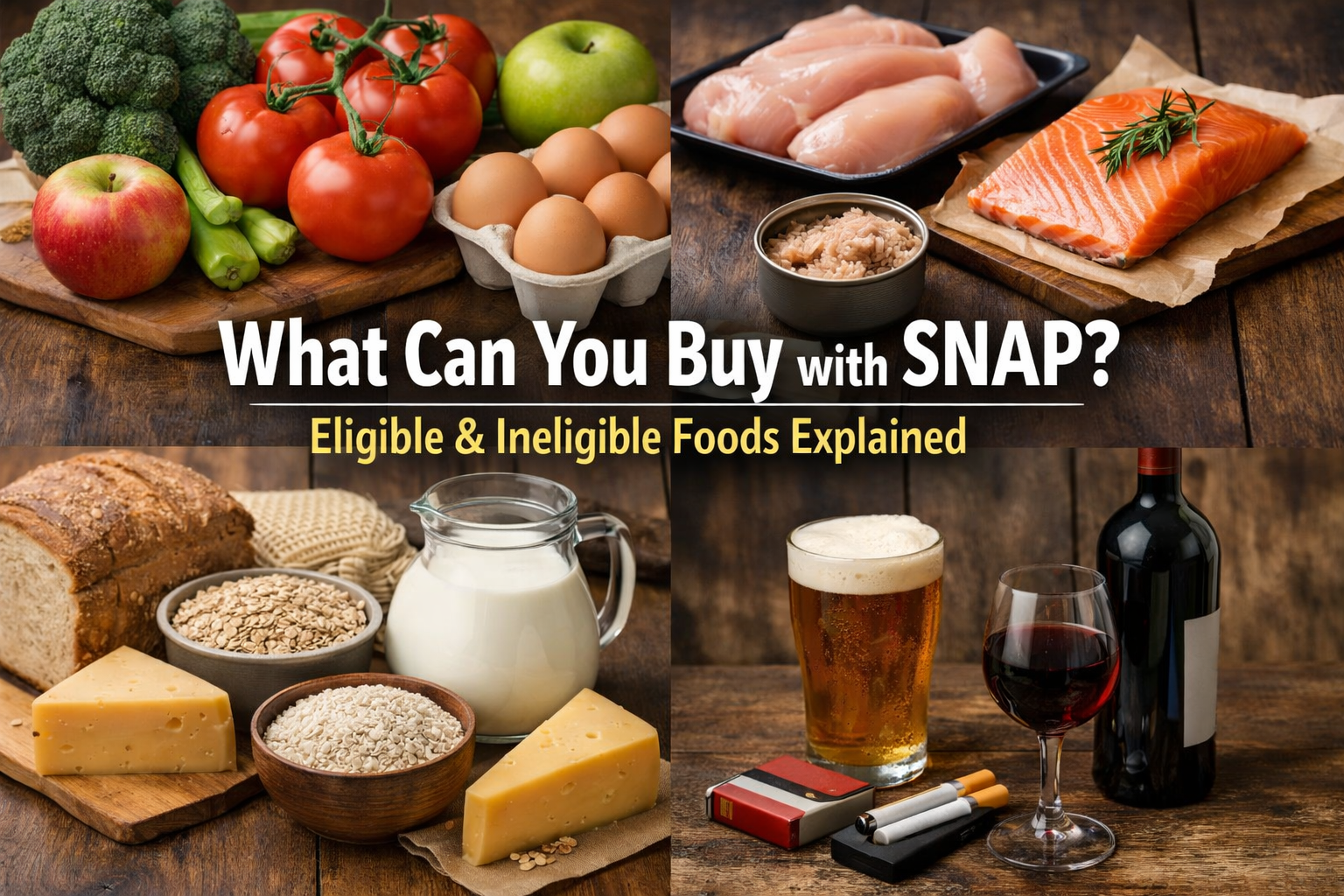
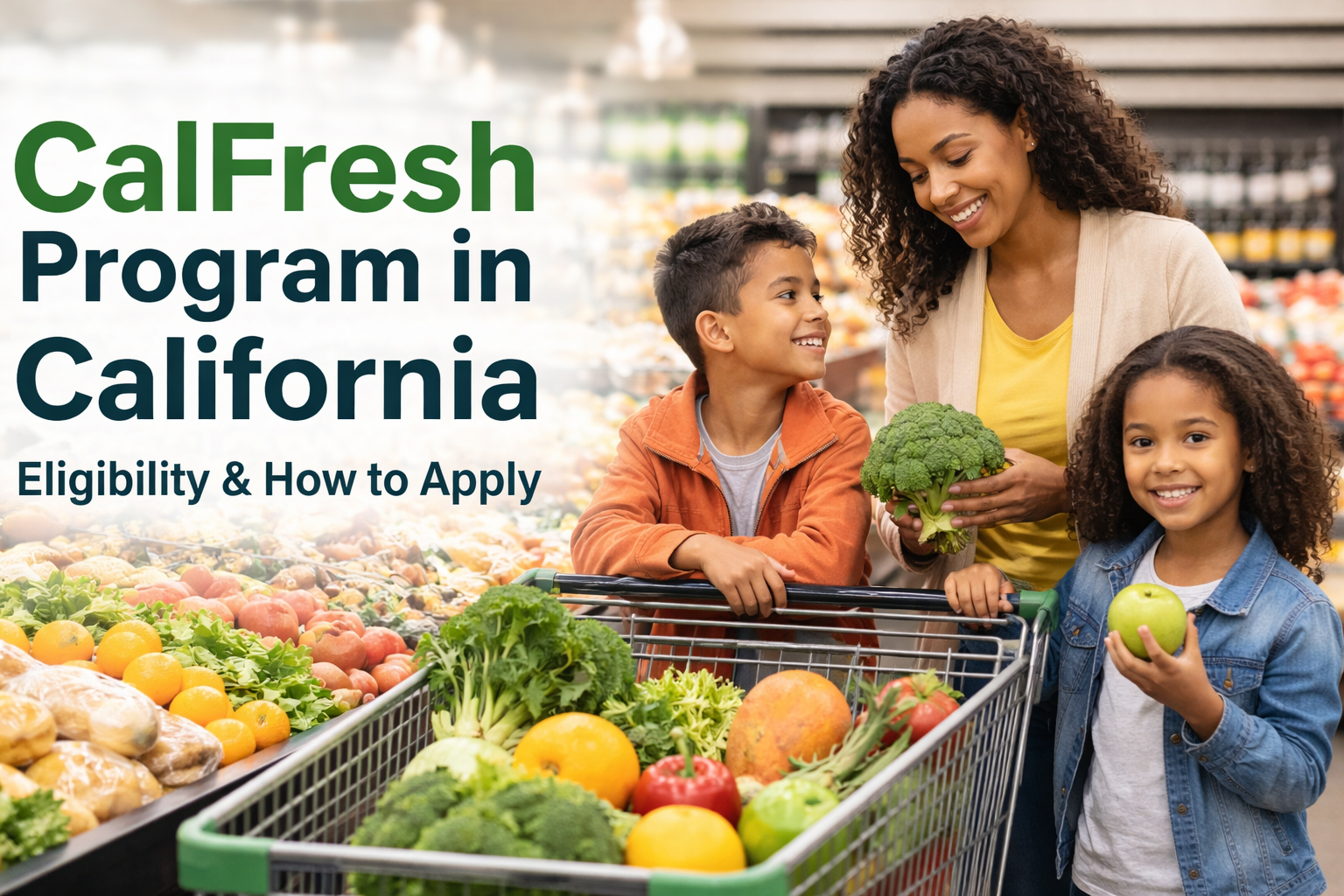
CalFresh is California’s version of the federal SNAP program, providing monthly electronic benefits to help low-income residents buy healthy food. In 2026, California remains one of the most accessible states for food assistance, offering expanded eligibility for students, immigrants, and seniors.
Table of Contents
2026 CalFresh Income Limits
California uses Modified Categorical Eligibility, which means most households only need to pass the Gross Income test (200% of the Federal Poverty Level) rather than the stricter federal 130% limit.
| Household Size | Monthly Gross Income (200% FPL) | Max Monthly Allotment (Estimate) |
|---|---|---|
| 1 | $2,510 | $291 |
| 2 | $3,406 | $535 |
| 3 | $4,303 | $766 |
| 4 | $5,200 | $973 |
| 5 | $6,096 | $1,155 |
| Each add’l | +$897 | +$211 |
Important: If your household includes someone 60+ or with a disability, there is no gross income limit, though your net income must still show financial need.
The “No Asset Test” Rule
Unlike many other states, California does not have an asset or resource limit for most CalFresh applicants. You can own a home, have money in a savings account, and own multiple vehicles without being disqualified. The state focuses almost entirely on your monthly income and living expenses.
Special Eligibility: Students & SSI Recipients
California has two unique rules that make CalFresh high-value for specific groups:
- SSI Recipients: For a long time, people on SSI couldn’t get CalFresh. That changed in 2019. If you receive SSI/SSP, you are now eligible to apply for CalFresh benefits without losing your monthly check.
- Student Rule: If you are a college student, you may qualify if you have a 0 EFC (Expected Family Contribution), receive a Cal Grant A or B, or participate in programs like EOPS or Puente.
How to Apply
California processes applications at the county level, but you can start centrally:
- Online: Use GetCalFresh.org or BenefitsCal.com. These take about 10 minutes.
- By Phone: Call the CalFresh Info Line at 1-877-847-3663.
- In-Person: Visit your local County Social Services office.
The Interview: Most interviews are now done via telephone. You do not usually need to visit an office in person unless your case is high-complexity.
The Bottom Line
California’s CalFresh program is one of the most generous in the country, with higher income ceilings and no asset penalties. If you are a student, a senior on SSI, or a working family struggling with California’s high cost of living, you likely qualify.
Don’t leave money on the table—apply today to start your 30-day approval window.
Also Read: California Dream For All Shared Appreciation Loan Explained
Frequently Asked Questions
Can I use CalFresh at Farmers Markets?
Yes! Many California markets offer “Market Match,” where they double your EBT dollars. If you spend $10 of CalFresh, they give you an extra $10 for free fruits and vegetables.
What is the Restaurant Meals Program (RMP)?
If you are 60+, disabled, or experiencing homelessness, you can use your CalFresh EBT card to buy prepared hot meals at participating restaurants like Subway, Burger King, or local diners in certain counties.
Do I qualify if I am a non-citizen?
Many non-citizens (Green Card holders, T-Visa, U-Visa, etc.) qualify. Applying for CalFresh does not count as a “Public Charge” and will not hurt your chances of becoming a U.S. Citizen.